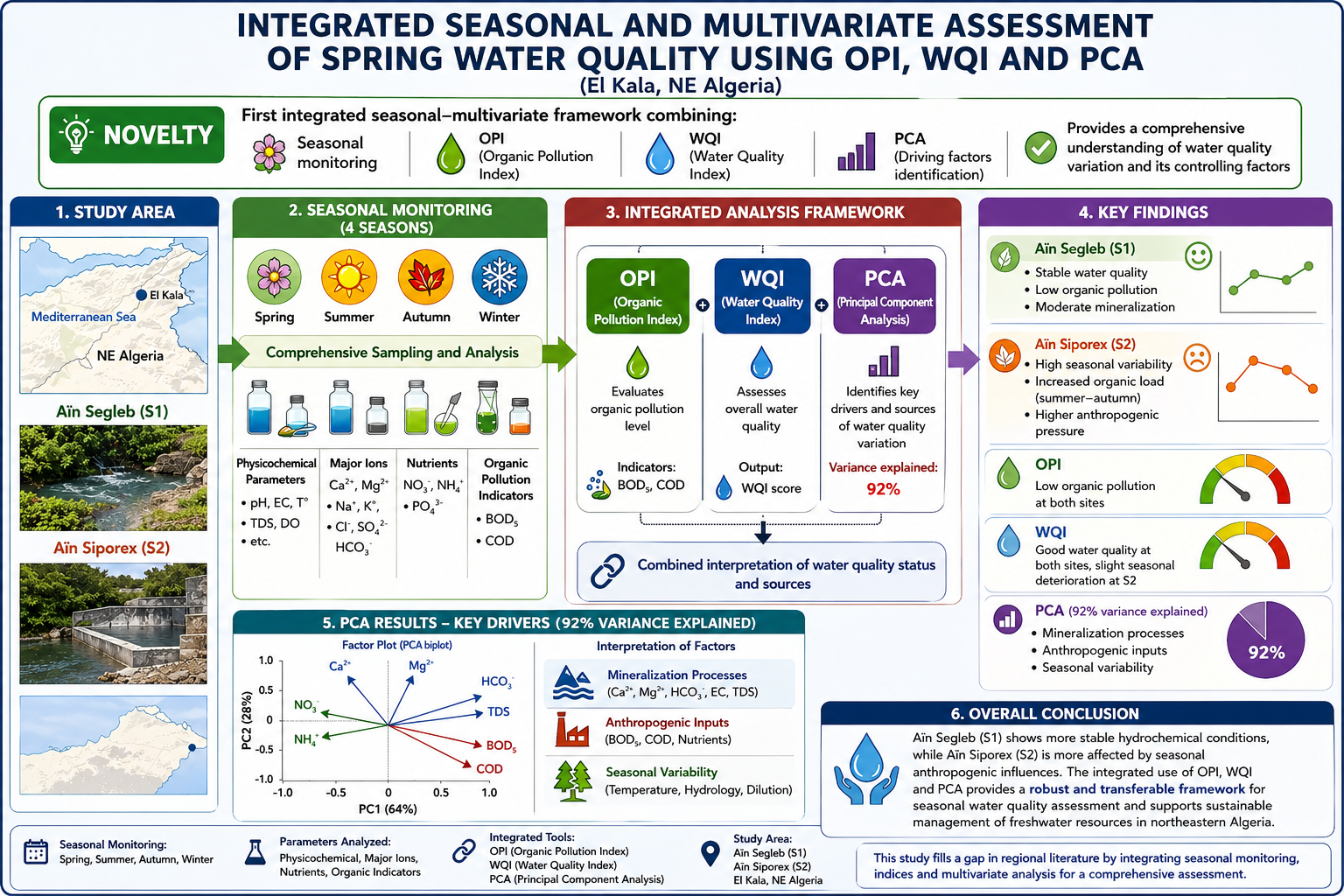
This study investigates the seasonal variability of surface water quality in two spring systems, Aïn Segleb (S1) and Aïn Siporex (S2), located in northeastern Algeria. Seasonal sampling (spring, summer, autumn, and winter) was conducted to evaluate physicochemical parameters, major ions, nutrients, and organic pollution indicators (BOD5 and COD).
Water quality was assessed using the Organic Pollution Index (IPO), Water Quality Index (WQI), and Principal Component Analysis (PCA) to identify the main factors controlling water quality variation.
The results showed clear spatial and seasonal differences between the two sites. Aïn Segleb exhibited relatively stable water quality with moderate mineralization and consistently low organic pollution throughout the year. In contrast, Aïn Siporex showed higher temporal variability, with increased organic loads during summer and autumn, suggesting stronger anthropogenic pressure.
IPO results indicated generally low organic pollution at both sites, while WQI classified the water as overall good quality, with slight seasonal deterioration at S2. PCA explained 92% of the total variance and highlighted mineralization processes, anthropogenic inputs, and seasonal effects as the main drivers of water quality variation.
Overall, Aïn Segleb presented more stable hydrochemical conditions, whereas Aïn Siporex was more affected by seasonal anthropogenic influences. These findings emphasize the importance of continuous seasonal monitoring for sustainable management and protection of freshwater resources in northeastern Algeria.