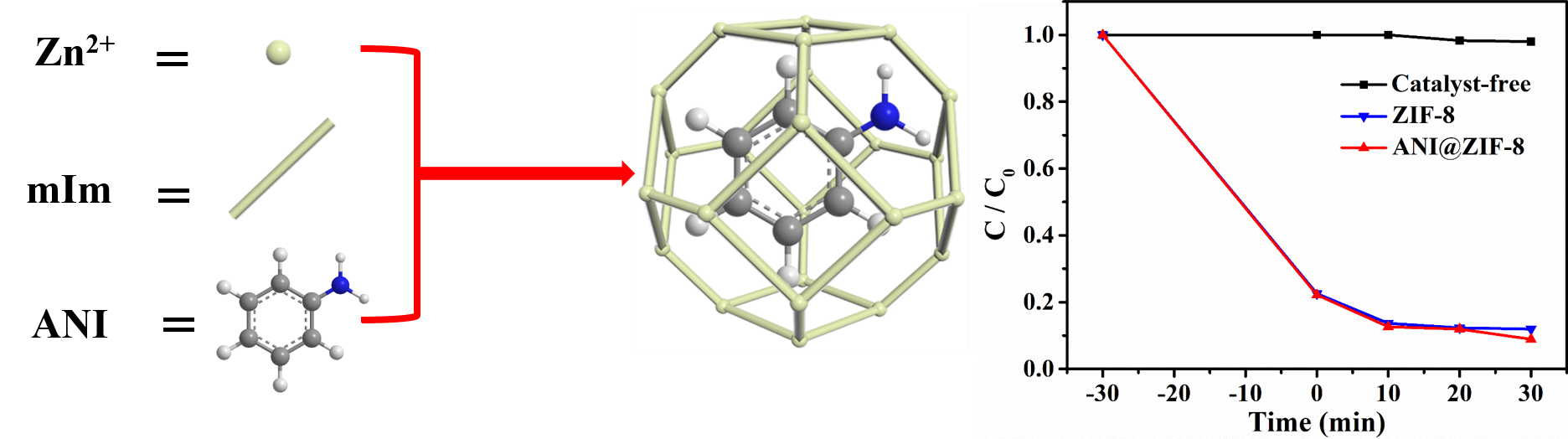
Metal-organic frameworks (MOFs) are new porous crystalline materials that have shown excellent application potential in pollutant degradation. This study used a one-pot method to prepared the composite catalyst ANI@ZIF-8. XRD and SEM techniques were used to characterize the crystal structure and micromorphology. The performance of ANI@ZIF-8 and ZIF-8 as photocatalysts for the degradation of Rhodamine B (RhB) under UV light irradiation was also investigated. The results show that compared with pure ZIF-8, the ANI@ZIF-8 catalyst has a more outstanding photocatalytic degradation effect on RhB dye, with a degradation rate as high as 91.1%. This advantage stems from the electronic structural interaction between aniline and ZIF-8, which both promotes the excitation process of electrons and inhibits the recombination of photogenerated electrons and holes, thereby improving the photocatalytic efficiency. Free radical capture experiments confirmed that superoxide radicals and hydroxyl radicals are the main active species in the RhB degradation process. The results of the cyclic experiment indicate that, the ANI@ZIF-8 catalyst can be effectively reused five times, significantly improving the economy of the process. Therefore, the ANI@ZIF-8 material provides a promising technological approach for the development of photocatalysts that can efficiently and stably treat wastewater organic pollutants.