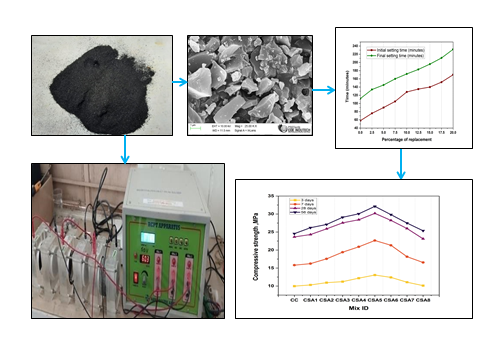
Concrete is the broadly adopted composite material in the construction arena. The growing need for cost-effective housing is resulting in the depletion of environmental resources such as river sand and gravel, which are essential components in the manufacture of concrete. However, the manufacturing of cement has been proven to have a negative impact on the environment because it contributes to the carbon footprint. The resolution of these environmental issues can be achieved through the implementation of sustainable solutions. This article explores the potential application of coconut shell ash as a substitute for cement in green concrete. Coconut shells (CS) are inevitable by-products derived from the agricultural sector. Coconut shell ash (CSA) was obtained through the combustion of coconut shells. The CSA is substituted by a range of 0 to 20% by weight of cement with a gradual 2.5% increase. The test findings concluded that 12.5% of CSA mix attained the maximum compressive strength. The durability results were found satisfactory in comparison with the normal concrete. The specimens were exposed to different temperatures (i.e., 100 °C, 200 °C, and 300 °C) for a consistent duration of one hour. The CSA concrete exhibited improved residual strength and weight reduction compared to conventional concrete.