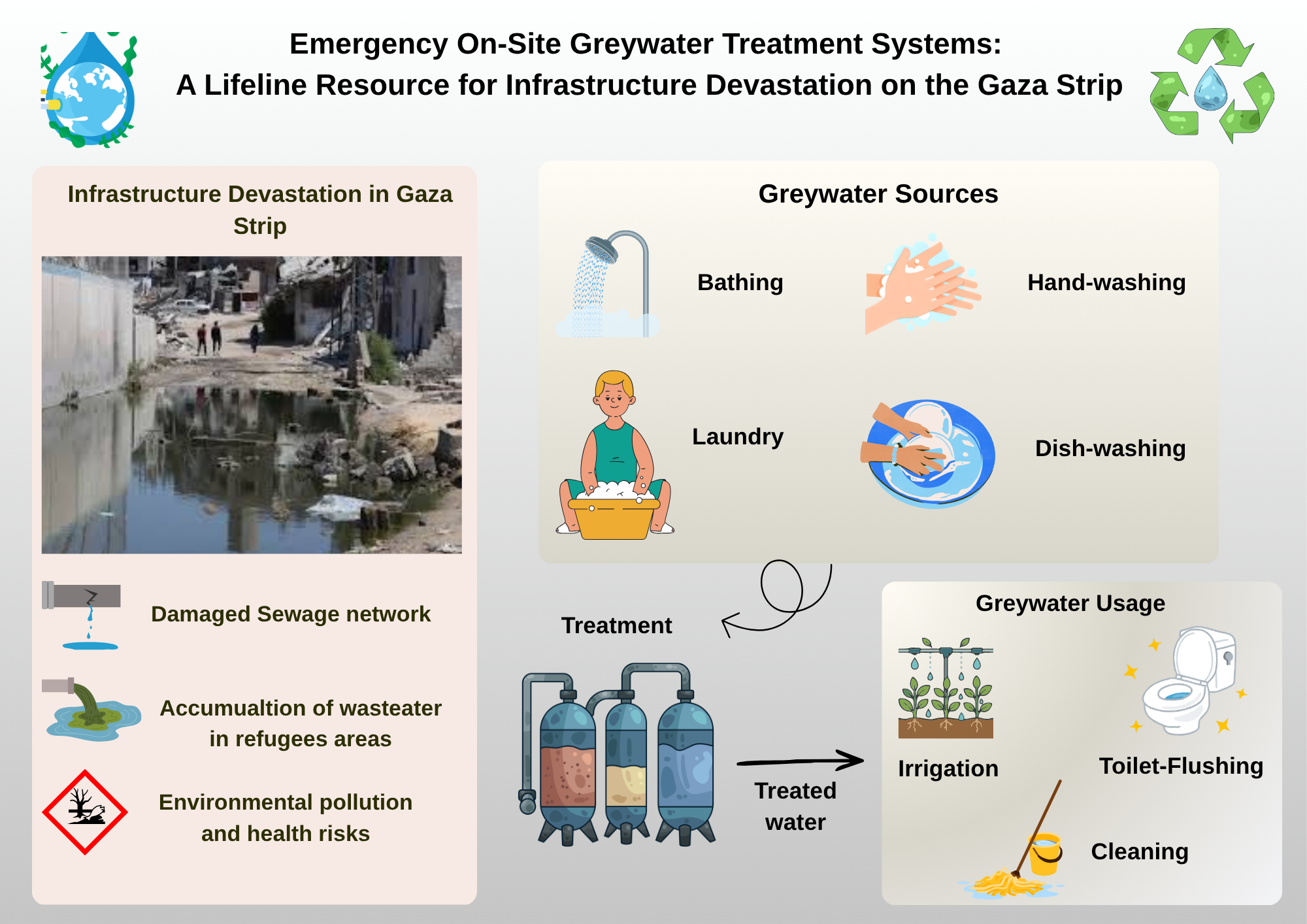
The Gaza Strip has been suffering from problems of water scarcity and wastewater management due to the prolonged blockade imposed and the limited entrance of the required materials for the operation of wastewater treatment plants. The authorities had established on-site greywater treatment Units (GWTUs) to reduce the volumes of discharged wastewater and to reuse the treated water for agriculture and non-potable uses. The aim of this study is to assess the economic, environmental, technical, social, and health impacts of applying GWTUs and highlight the obstacles and facilitators to their implementation. Through two questionnaires administered to 52 households and WASH sector experts, the study shows that irrigation reuse was the principal motivation for GWTU adoption (86% of users), leading to 71.4% overall beneficiary satisfaction. Nonetheless, considerable operational obstacles endure as 35% of GWTUs were inoperative due to maintenance issues, reliance on electricity, and insufficient user knowledge. A significant economic obstacle is the 600% rise in operational expenses associated with private generators ($0.90/kWh) relative to the municipal grid ($0.15/kWh), leading 89% of beneficiaries to identify financial strain from operation and maintenance as a principal concern, while 75% report issues with leakage. However, GWTUs are acknowledged as a crucial emergency alternative, facilitating decentralized water management and contributing to resilience in disaster settings. The results highlight the essential requirement for flexible economic measures, including energy-efficient designs and community-oriented financing, to guarantee the enduring sustainability of GWTUs in conflict-impacted areas.