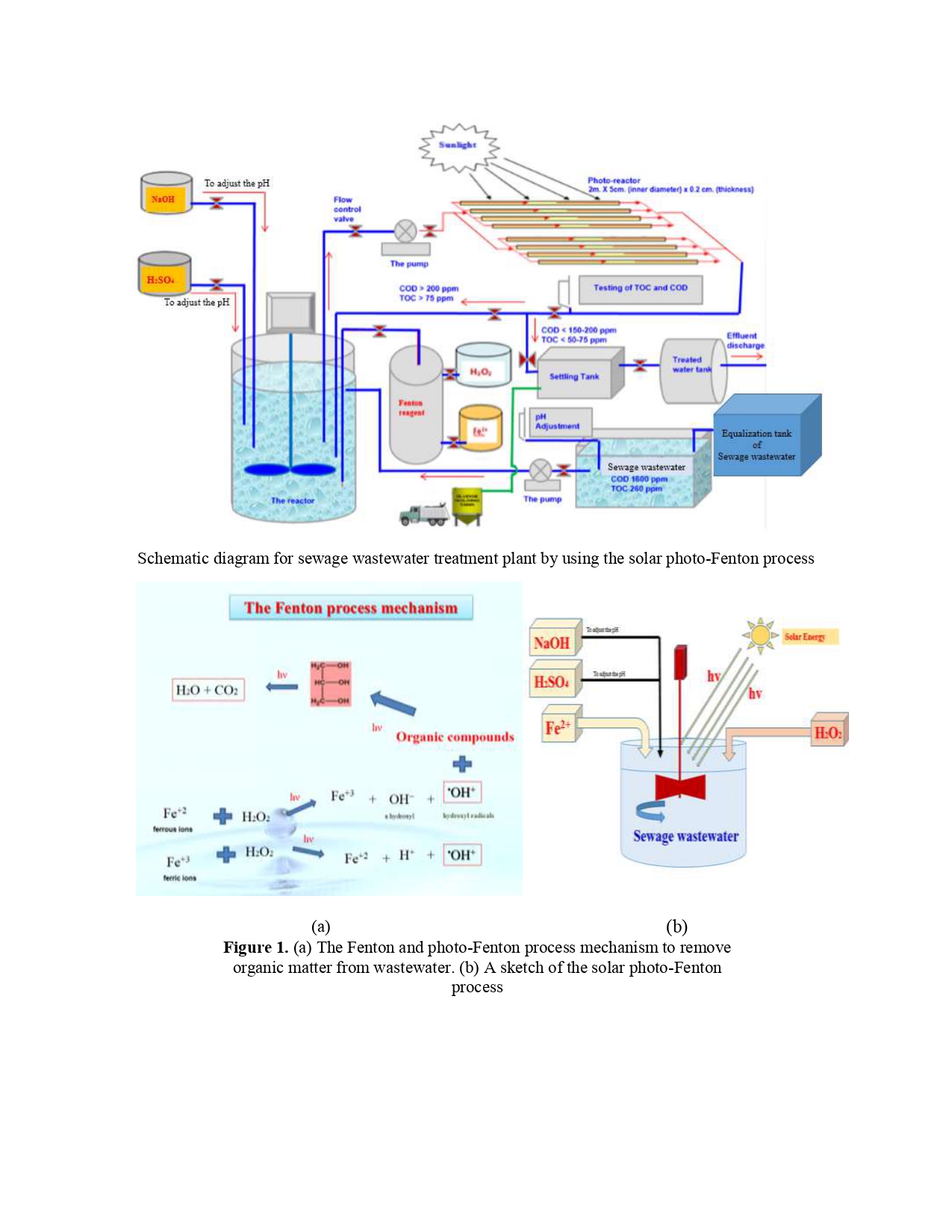
Aquatic organisms and human health face threats from hazardous pollutants that enter the aquatic environment via wastewater. The characteristics of wastewater differ from location to location, depending on the sources of pollution. This study aimed to analyse organic matter in wastewater samples from the engineering campus of Universiti Sains Malaysia (USM) by employing a solar photo-Fenton method within a central composite design (CCD) framework that utilizes response surface methodology (RSM). In a 60-day study, the independent variables (factors) were the initial concentration of organic matter, hydrogen peroxide dosage, ferrous ion dosage, pH, and reaction time, while the dependent variable (response) was the removal of chemical oxygen demand (COD). The findings indicated that the ideal conditions for the removal of organic matter included a hydrogen peroxide dosage of 100 mg/L, a ferrous ion dosage of 10 mg/L, a pH level of 4, and a reaction time of 120 minutes. The quadratic models derived from the central composite design (CCD) using response surface methodology (RSM) demonstrated statistical significance. This is evidenced by a coefficient of determination (R² = 0.9093) and a probability value (P < 0.0001), both indicating significant results for the chemical oxygen demand (COD) removal model. An experimental design for a wastewater treatment plant employing the solar photo-Fenton process was investigated to attain optimal efficiency. The plant was engineered to meet the requirements set forth by the Malaysian Environmental Quality Regulations (Wastewater) 2009, Standard B. The results were positive and may inform the design of future treatment units using this method. The experiment demonstrated that the solar photo-Fenton process is a practical and effective method for removing pollutants.