Abstract
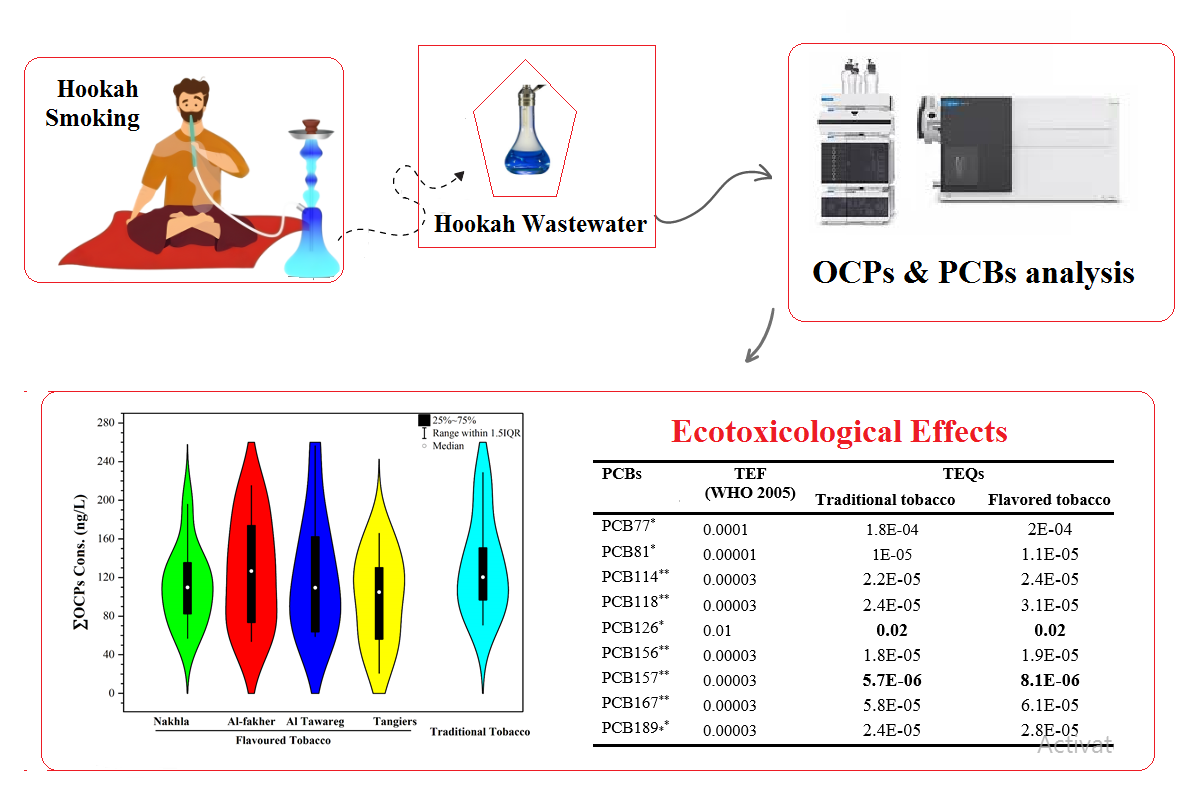
Concerns regarding flavored and traditional waterpipe smoking are rising due to their significant health and ecological implications. This research intends to thoroughly assess the concentration of polychlorinated biphenyls (PCBs) and organochlorine pesticides (OCPs) found in the waterpipe wasewater. Samples from four major brands of flavored tobacco (Nakhla, Al fakher, Al tawareg, Tangiers) and traditional tobacco were analyzed. All samples were contaminated with PCBs and OCPs, and flavored tobacco brands have higher total concentrations than traditional tobacco. For example, PCBs concentrations in flavored tobacco samples were 10.36 -11.94 μg/L, which exceeds the concentration in traditional tobacco at 10.26 μg/L. β-HCH was the most prevalent OCP, representing up to 51% in flavored tobacco wastewater and 45% in traditional tobacco wastewater. PCB194 was the most abundant PCB, consistently making up 24-25% of the entire PCB concentration. The risk quotient (RQ) for values traditional and flavored hookah wastewater were ranged from 0.00 (δ-HCH) to 2.46 (endosulfan) and 0.00 (δ-HCH) to 3.50 (endosulfan), respectively. The environmental and health impacts of hookah wastewater, particularly concerning PCBs and OCPs and other toxic compounds, are becoming increasingly concerning. Despite the relatively low toxic equivalent (TEQ) values associated with hookah wastewater, the continuous discharge of such waste into aquatic environments present considerable threats to the wellbeing of both natural habitats and people. Addressing this contamination requires concerted efforts from policymakers, researchers, and communities worldwide to develop effective solutions.