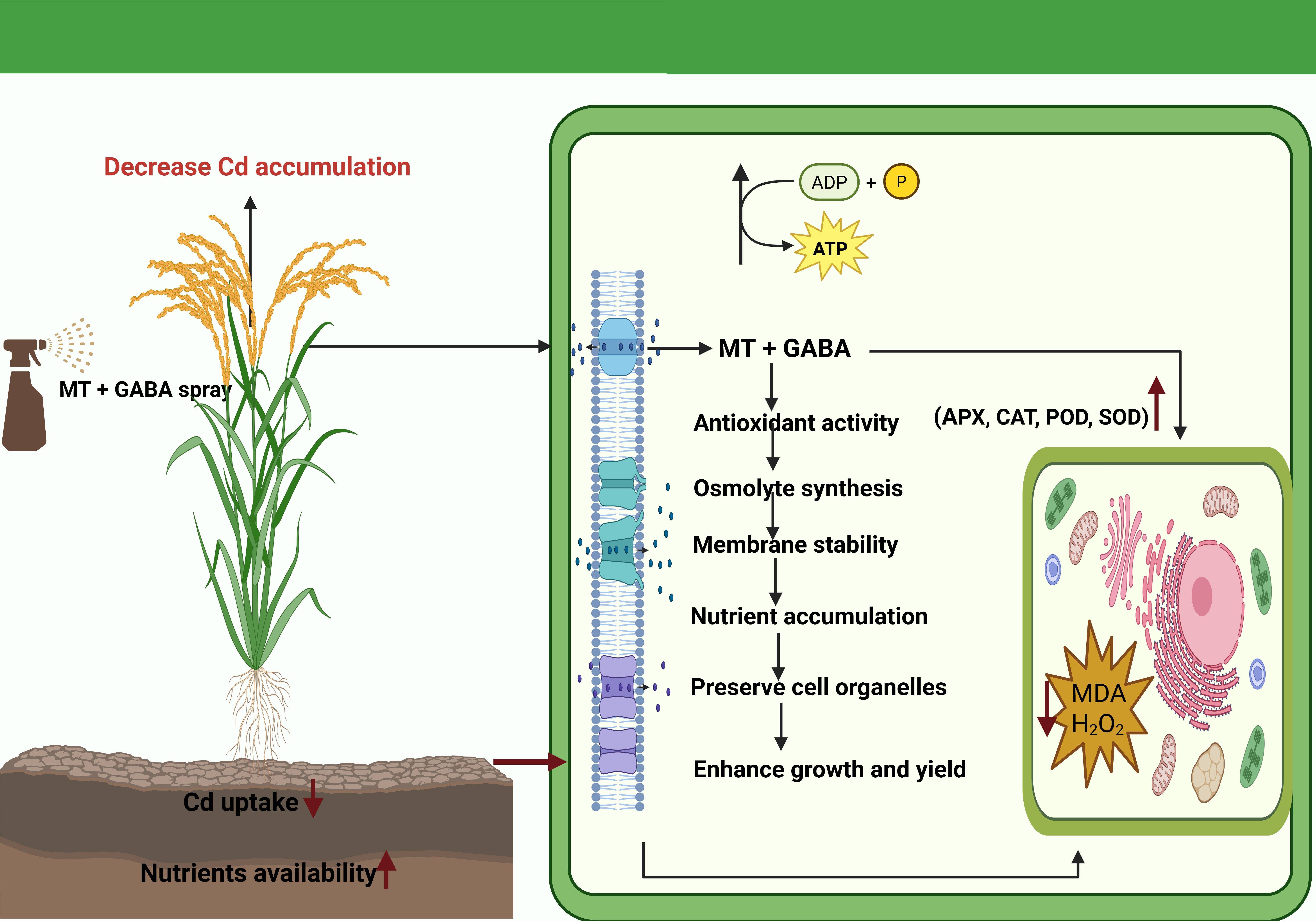
Soil cadmium (Cd) contamination poses a serious challenge to crops. The exogenic application of growth hormones is an important strategy in addressing the challenge of Cd pollution. The study explores the impact of combined melatonin (MT) and gamma-aminobutyric acid (GABA) in mitigating Cd toxicity with these treatments; control, Cd stress (250 μg kg-1), Cd stress + melatonin (MT: 100 μM), Cd stress + GABA (1 mM) and Cd+ MT + GABA. Cadmium toxicity significantly decreases rice growth and yield productivity by increasing oxidative markers, Cd accumulation, and decreasing photosynthetic pigments, osmolyte productions and nutrients availability. Melatonin and GABA significantly decreased the adversities of Cd and increased rice productivity. Co-applying MT and GABA decreased hydrogen peroxide (H2O2), malondialdehyde (MDA), electrolyte leakage (EL) by 34.59%, 44.74% and 105.40%, soil Cd availability, and increased chlorophyll synthesis (36.61- 54.67%) and antioxidant activities (48.38-121.34%), therefore lead to an increase in growth and yield. Further, MT and GABA also reduced Cd accretion in rice roots and shoots and increased the nutrients availability favoring the growth of rice plants in Cd stress conditions. These results underpin the potential combined MT + GABA application in improving crop productivity and remediating Cd polluted soils.