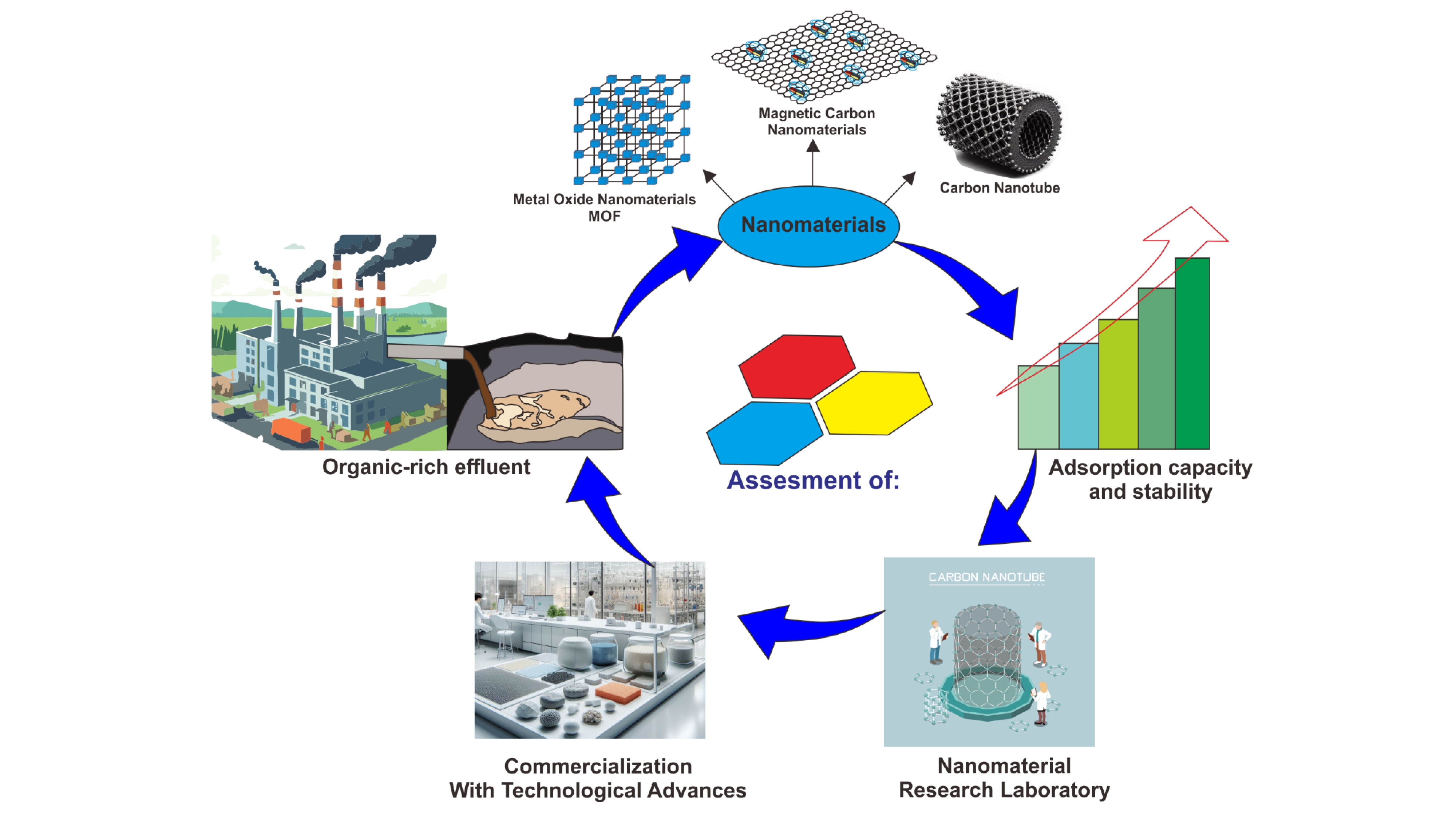
The treatment of organic-rich effluents poses significant challenges in wastewater management due to the complex nature of contaminants and the limitations of conventional treatment methods. This review explores the potential of nanomaterials as advanced adsorbents for the remediation of organic pollutants, highlighting their unique physicochemical properties such as high surface area, tunable porosity, and reactivity. Carbon-based nanomaterials, including carbon nanotubes (CNTs) and graphene, along with metal-organic frameworks (MOFs) and layered double hydroxides (LDHs), demonstrate superior adsorption capacities and stability, making them suitable for diverse effluent compositions. However, despite their promising performance in laboratory settings, challenges such as high production costs, material stability, and scalability hinder their widespread industrial application. This review also identifies key future directions, including technological advancements, scaling up and commercialization strategies, and interdisciplinary research to bridge existing knowledge gaps. By addressing these challenges through innovative research and development, nanomaterials have the potential to significantly enhance the efficiency and sustainability of wastewater treatment processes, contributing to global environmental remediation efforts.