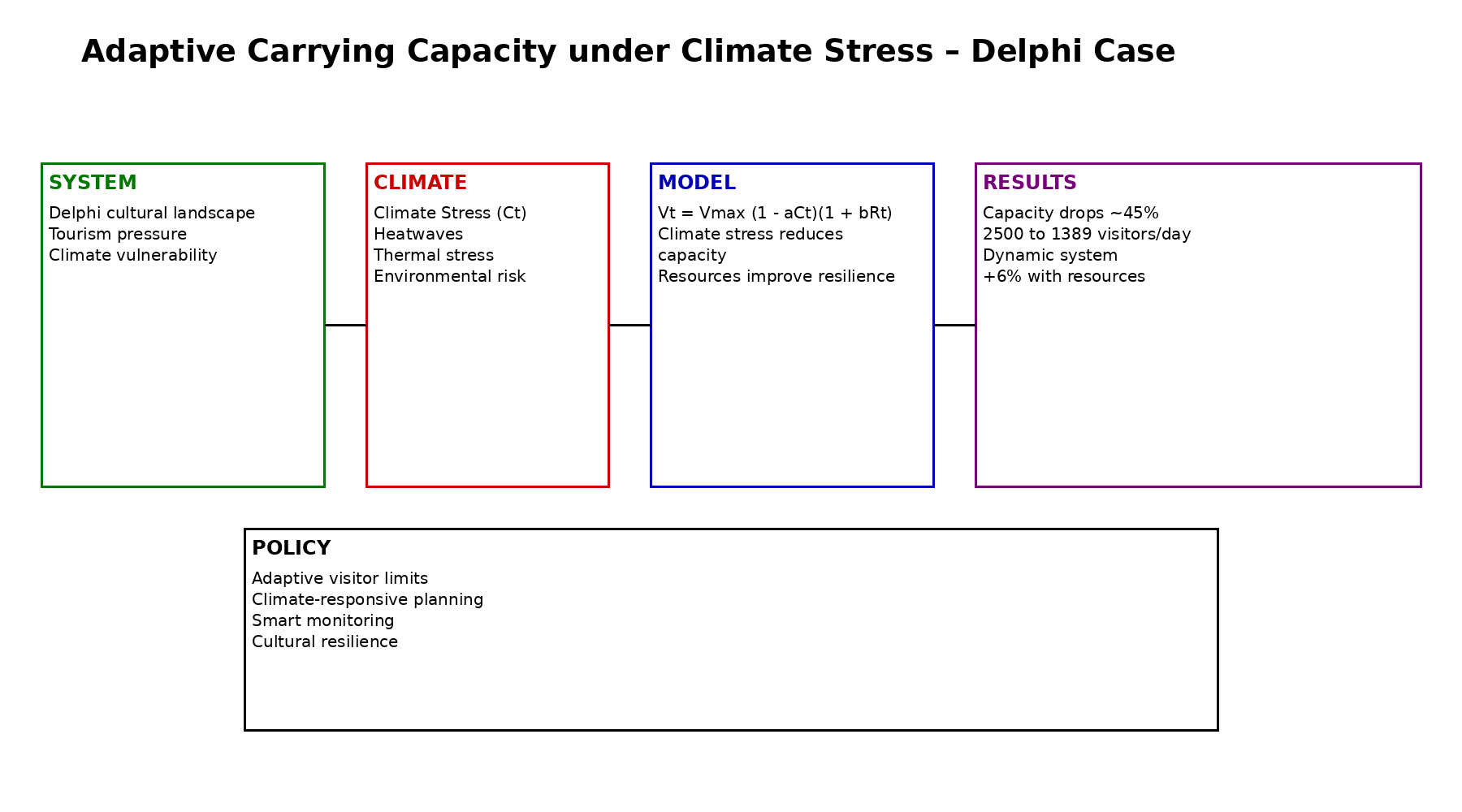
This study explores sustainable cultural development in the context of the climate crisis, using Delphi as a representative case of a cultural landscape increasingly exposed to environmental pressures. It develops a theoretical and interpretive framework supported by a simplified mathematical model that links visitor capacity, climate stress, and management resources. The model is applied using empirical data in order to examine how changing climatic conditions may influence the site’s carrying capacity. The findings suggest that climate stress can significantly affect the number of visitors that can be safely accommodated, while improvements in management resources may help mitigate part of this effect. These results highlight the importance of adopting adaptive and climate-responsive management strategies. Overall, the study aims to contribute both to the theoretical discussion and to the practical management of cultural heritage sites facing growing climate-related challenges.