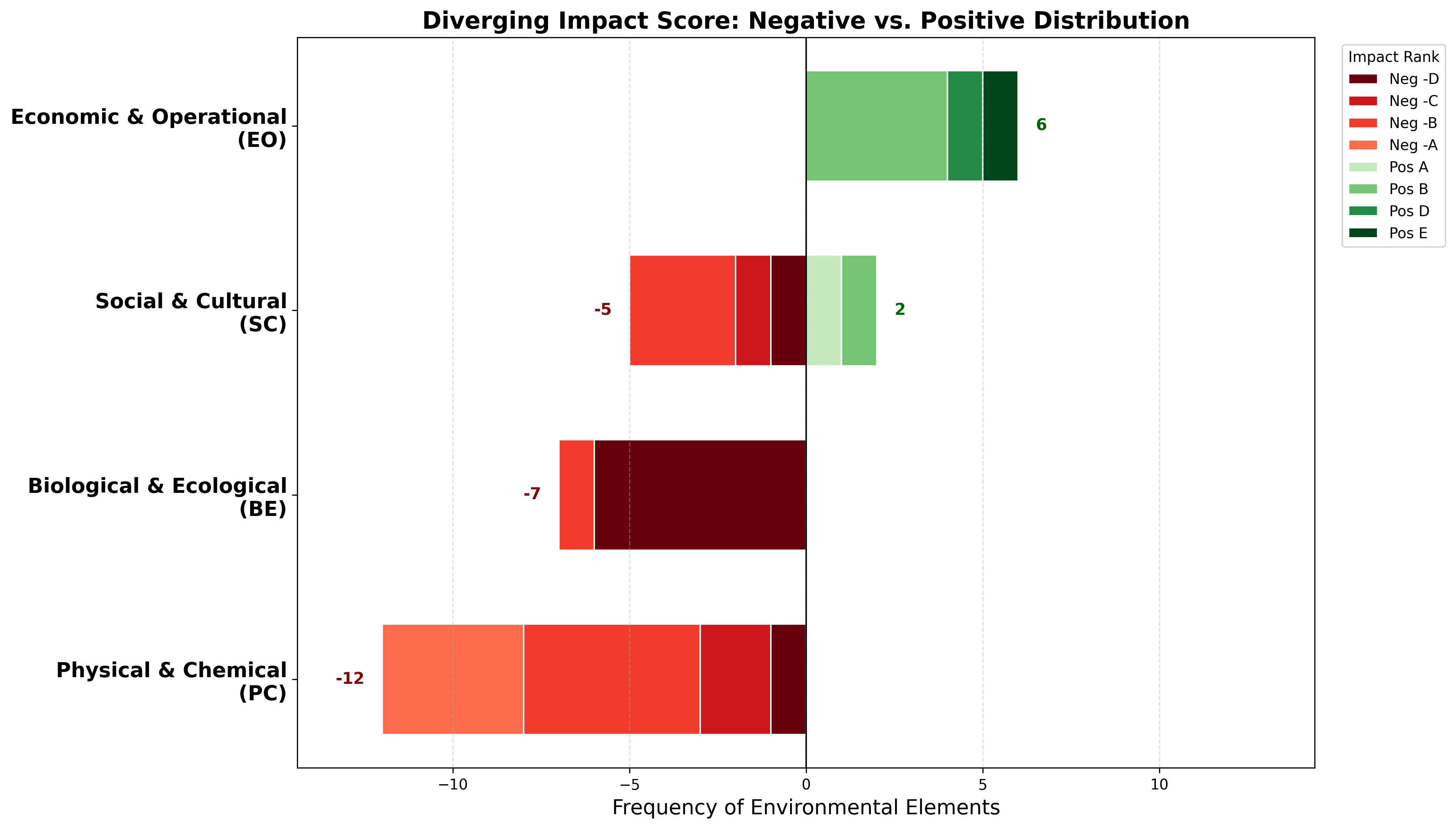
The environmental impact assessment (EIA) of the Djebel Onk phosphate mine, utilizing the Rapid Impact Assessment Matrix (RIAM), reveals a significant disparity between the substantial economic benefits and serious environmental challenges. The results indicate substantial negative impacts on biological and ecological components, with marked degradation observed in steppe grazing areas, vegetation cover, and faunal diversity. Additionally, moderate to limited adverse effects on air and water quality, as well as public health, were attributed to dust emissions, pollution, and vibrations caused by mining operations. Conversely, the economic and operational factors demonstrated significant positive effects, reflected in support for the national economy, job creation, and improved municipal financial resources. To reconcile these opposing outcomes, the study recommends adopting integrated environmental strategies that prioritize strict risk management, enhanced regulatory monitoring, and the development of pollution reduction technologies. Ultimately, achieving a balance between economic development and environmental preservation requires an urgent, responsible, and sustainable strategy.