Historic city centers embody the cultural, architectural, and social identity of urban areas, linking the past with contemporary development. Their preservation and integration into modern urban life are vital for local and regional development, creating opportunities for tourism, investment, and creative industries, while also facing challenges such as overcrowding, gentrification, and infrastructural pressures.
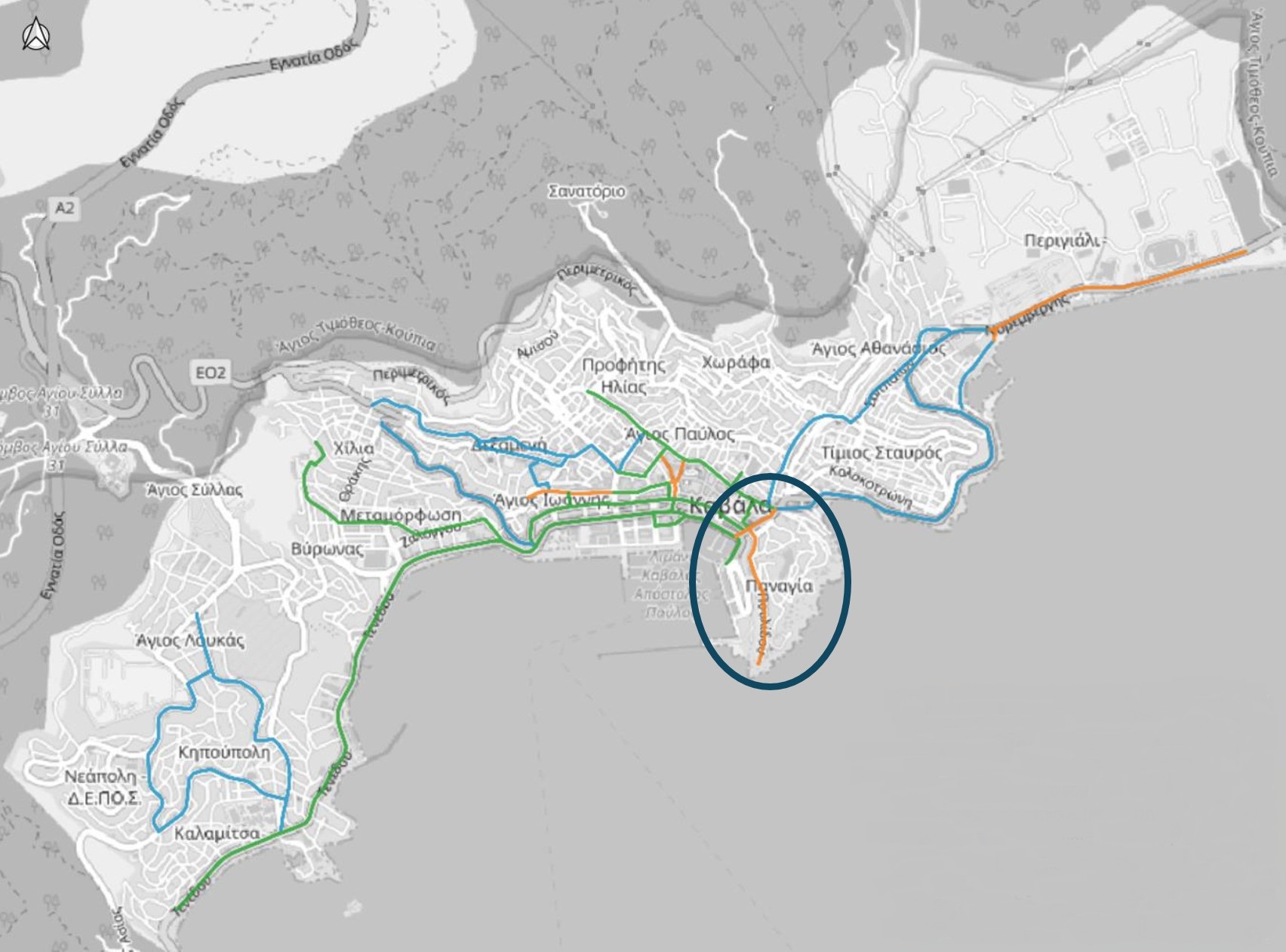
The Panagia district (Old Town) of Kavala illustrates these dynamics. As the city’s original historic core, it occupies a strategic position within the modern urban fabric and functions as a key organizing element of Kavala’s spatial structure. Significant morphological changes began in the mid-19th century alongside commercial expansion. Population growth intensified pressure on the peninsula, which until 1864 had developed within the city walls. By the time urban expansion moved beyond the fortifications, the area had become highly densified: plots were fully built, neighborhood identities weakened, buildings abutted the walls, and dead-end streets increased.
This paper examines urban transformation processes in historic city centers, focusing on Panagia, and analyses how urban morphology and spatial organization shape regional development and identity. It also explores strategies to enhance resilience while safeguarding historical character, emphasizing adaptive reuse, heritage conservation, and sustainable development. The study highlights how historic cores can balance conservation with contemporary social, functional, and economic needs.