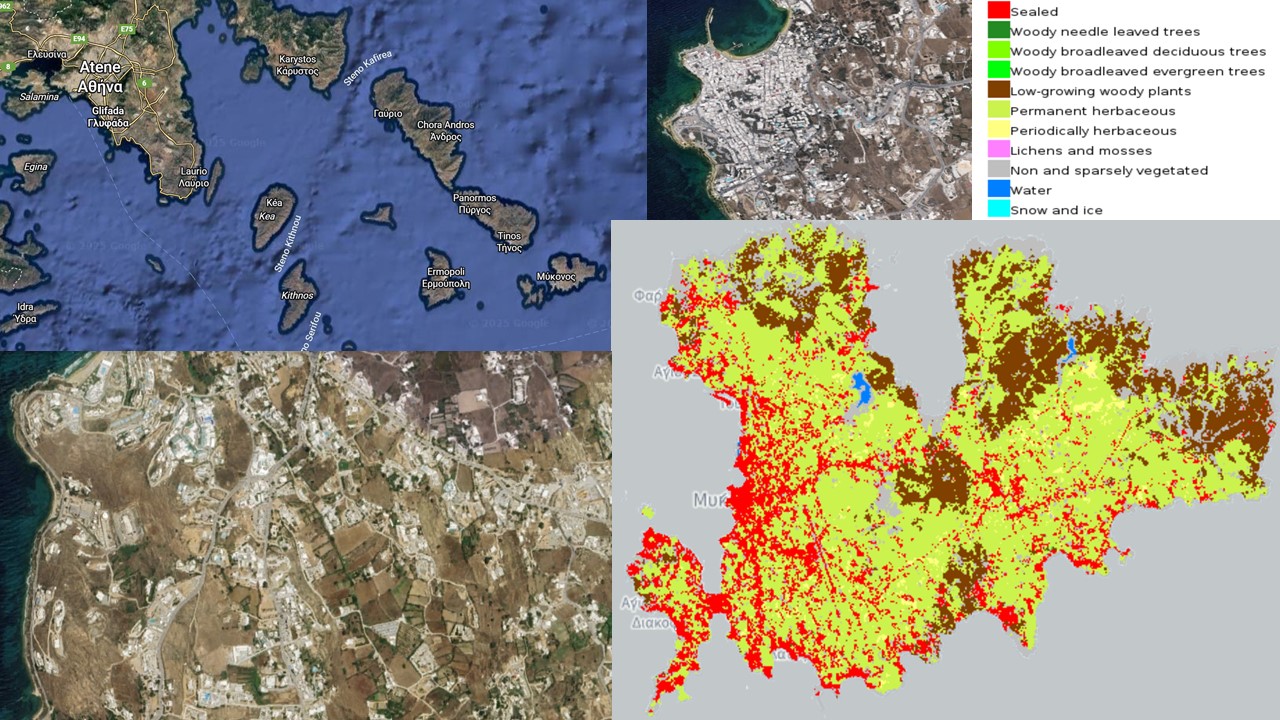
Exurban development is a basic process of regional change characteristic of both urban and rural districts of advanced economies. While experiencing persistent sprawl processes, European, and especially Mediterranean, regions reflect diversified development paths often under distinctive socio-demographic conditions. In these contexts, (originally) rural areas evolved under rapid transformation because of tourism development. Such dynamics require additional research and comparative (planning) analysis aimed at supporting a comprehensive understanding of their territorial complexities and economic implications. A comparative scrutiny of key variables such as varying population sizes and settlement densities, availability of buildable land, activities’ concentration, prevailing institutional characteristics, and cultural traits of local communities, will provide relevant information overcoming the knowledge gap mentioned above. A paradigmatic example of tourism-driven sprawl determining low-density settlement expansion and uneven second-home growth in rural districts of Mykonos’ island, Greece, was presented here. The study has extensively benefited from the use of official statistics – mainly population censuses – and field survey. Our empirical findings clarify the intrinsic peculiarity of rural sprawl and tourism development processes in respect with other socioeconomic contexts in Southern Europe, possibly demonstrating the policy-driven appropriateness of an integrated assessment framework of rural sprawl that may consider the outcomes of this (and similar) study(-ies) at both local and regional scale.