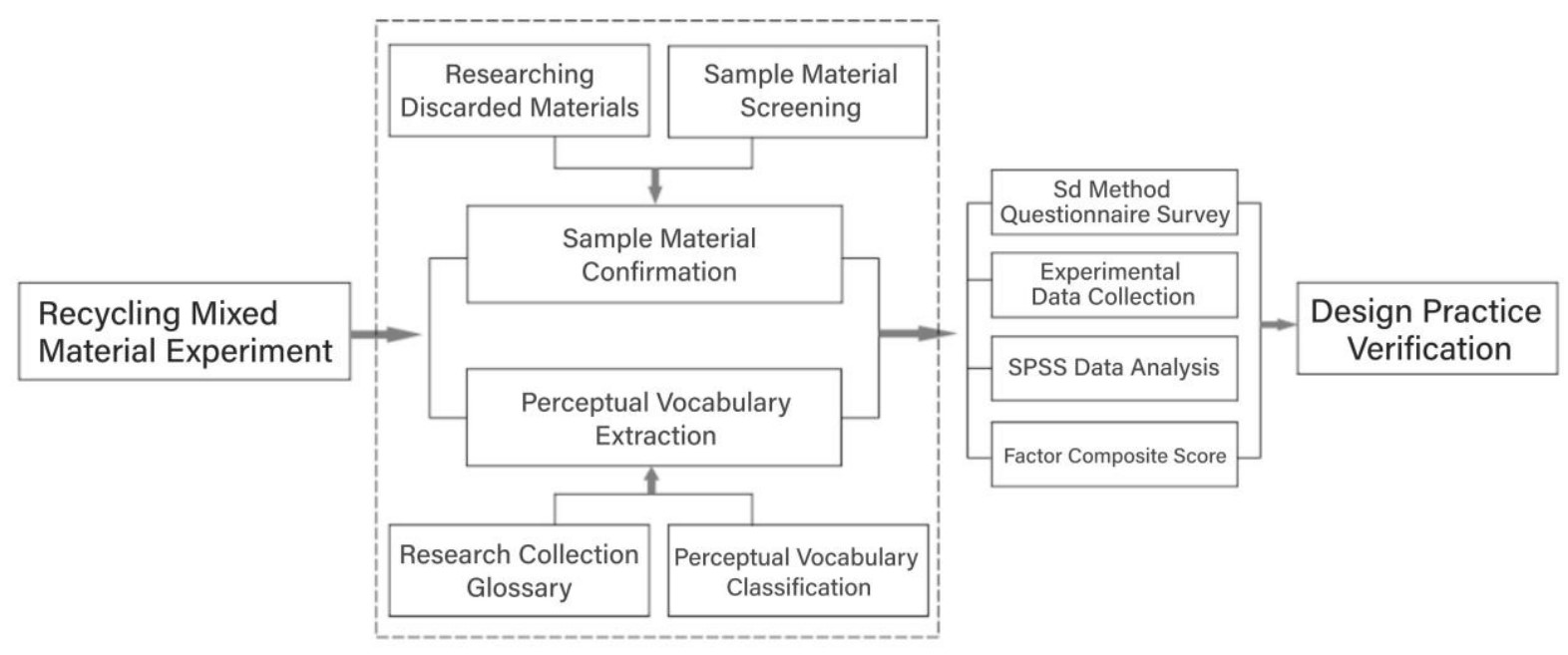
This study develops and validates a Kansei driven design workflow that aligns users’ affective responses to recycled materials with sustainability objectives, supporting China’s dual carbon policy. Perceptual descriptors were elicited through semi structured interviews and organized using the KJ method to produce key bipolar adjective pairs. Twelve mixed material samples were fabricated and assessed with a semantic differential questionnaire employing Likert type scales. Principal component analysis (PCA) was used to extract latent evaluative dimensions and generate factor scores for comprehensive ranking. The highest ranked material configuration was transformed into a stationery prototype, which was then evaluated for user satisfaction and thematic fit. Findings show that PCA effectively revealed distinct perceptual dimensions reflecting users’ emotional evaluations of recycled materials, and the preferred configuration achieved high satisfaction and strong alignment with sustainable design principles after prototyping. These results demonstrate the feasibility of the Kansei driven workflow for integrating perceptual feedback into recycled material selection and product development. The end to end process from vocabulary elicitation, through evaluative modeling, to design translation provides a replicable pathway to enhance user acceptance and resource efficiency.