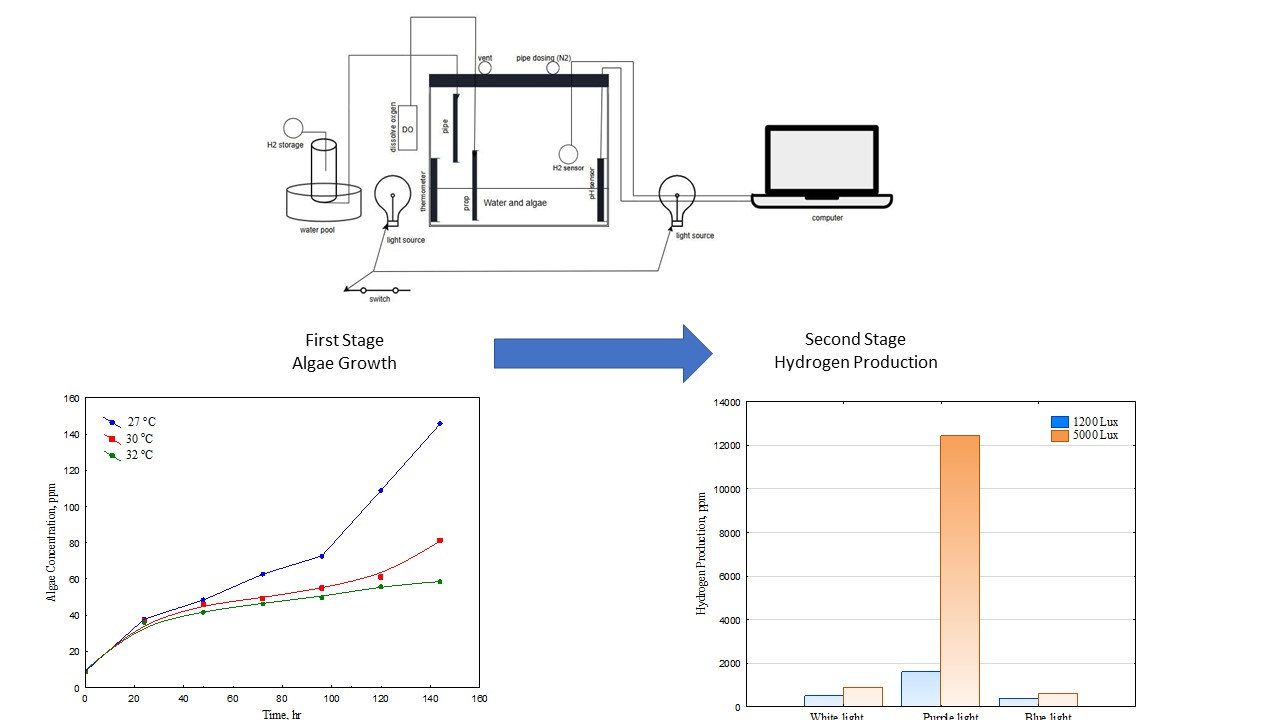
The increasing demand for sustainable energy sources worldwide has led to an upsurge in the consideration of biologically produced hydrogen as an alternative clean energy resource. In this regard, the current research investigates the eco-efficient production of biohydrogen from the algal organism Chlorella vulgaris using an optimized two-stage hybrid process, which combines algae growth enhancement and hydrogen production through the use of nutrients. A thorough examination of the effects of culture medium formula, light spectrum, intensity, phosphate level, temperature, and pH levels on algae growth and hydrogen production was carried out. The findings revealed that algal growth was optimal in NPK (20:20:20), indicating a well-balanced nutrient composition compared to BG11 and industrial wastewater growth medium, which is essential for stimulating growth in Chlorella vulgaris for sustainable biohydrogen production. However, the results obtained indicated that algae growth and hydrogen production were optimal under conditions characterized by controlled limitations in phosphate levels at 0.4 ppm, establishing the nutristategic approach as an essential requirement for enhanced hydrogenase activity in biohydrogen production. In the context of light sources examined within the study, the effect of violet lights at an intensity of 2000 lux had a practical enhancement approach for both algae growth and hydrogen production, establishing the energy synergistic requirement based on photobiology aspects for effective algae growth stimulation and enhanced biohydrogen production based on the algal photosynthesis process. Additionally, the Response Surface Methodology approach based on the Box-Behnken design addressed an optimal growth process for algae at a pH requirement of 6.58 and a temperature requirement of 27.57 °C, advocating for the need to achieve