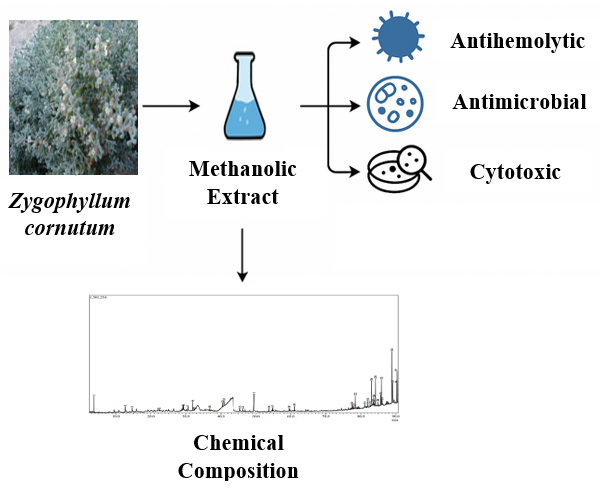
Zygophyllum cornutum is recognized for its traditional medicinal use among certain populations in the northern Sahara of Algeria for different conditions, including hypertension and diabetes. The current study sought to ascertain the chemical composition and efficacy of Zygophyllum cornutum methanolic extract (ZcME) regarding cytotoxicity, antihemolytic properties, and antibacterial activity by agar diffusion experiment. Thirty-four bioactive phytochemical components were discovered in the methanolic extract of Zygophyllum cornutum. The identification of phytochemical substances relies on retention duration, molecular weight, and molecular formula. The study's findings first suggest that the methanolic extract of Zygophyllum cornutum is non-toxic at dose levels up to 20 mg/ml. ZcME had significant antimicrobial efficacy against Escherichia coli, exhibiting progressively larger inhibition zones at elevated concentrations (ranging from 8 mm at 5 mg/mL to 23 mm at 40 mg/mL), with all MIC/MBC values equal to 1, indicating the extract's bactericidal properties. At a concentration of 1.25 mg/mL, ZcME and ascorbic acid demonstrate equal antihemolytic activity (26% vs. 28%), indicating that, at this low dosage, ZcME may possess equivalent efficacy to ascorbic acid in safeguarding red blood cells from lysis.