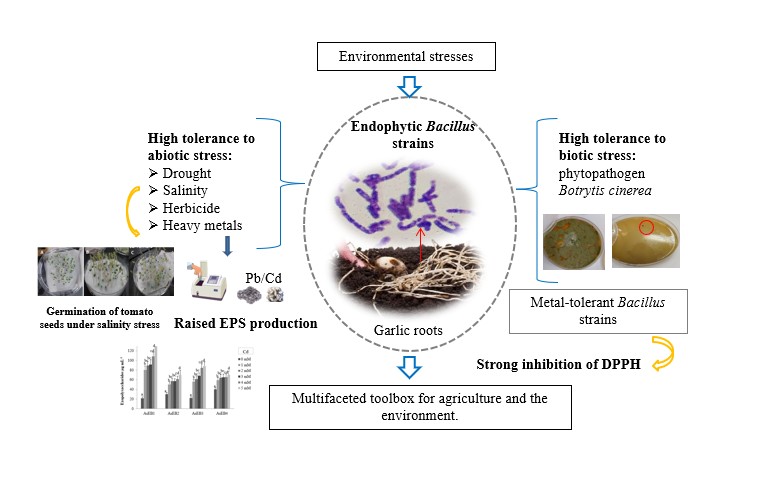
The selection of plant-associated bacteria tolerant to various stressors offers an eco-efficient strategy for sustainable agriculture. This study evaluates the resilience of four Bacillus spp. endophytes isolated from garlic (Allium sativum) roots against key abiotic and biotic challenges, including drought, salinity, herbicide (florasulam/2,4-D ester), heavy metals (Pb and Cd), and the phytopathogen Botrytis cinerea. Among the isolates, AsEB4 exhibited the highest stress tolerance, achieving maximal growth (0.985±0.27) under drought conditions (−1.0 MPa) and maintaining a survival rate of 92.62±1.32 under high salinity (400 mM NaCl). All strains tolerated herbicide concentrations up to 1200 µL mL-1, and maintained robust growth under heavy metal stress, with a maximum tolerated concentration of 5 mM for Pb and Cd. EPS production and antioxidant activity increased dose-dependently with metal concentration, tending to a saturation point at higher levels (Tukey’s test; p<0.05). Additionally, the isolates displayed strong antagonistic activity against Botrytis cinerea (>96%). These findings highlight the potential of garlic-associated Bacillus endophytes as sustainable microbial resources for stress mitigation, supporting the development of bio-based agents to reduce chemical inputs and enhance environmental resilience.