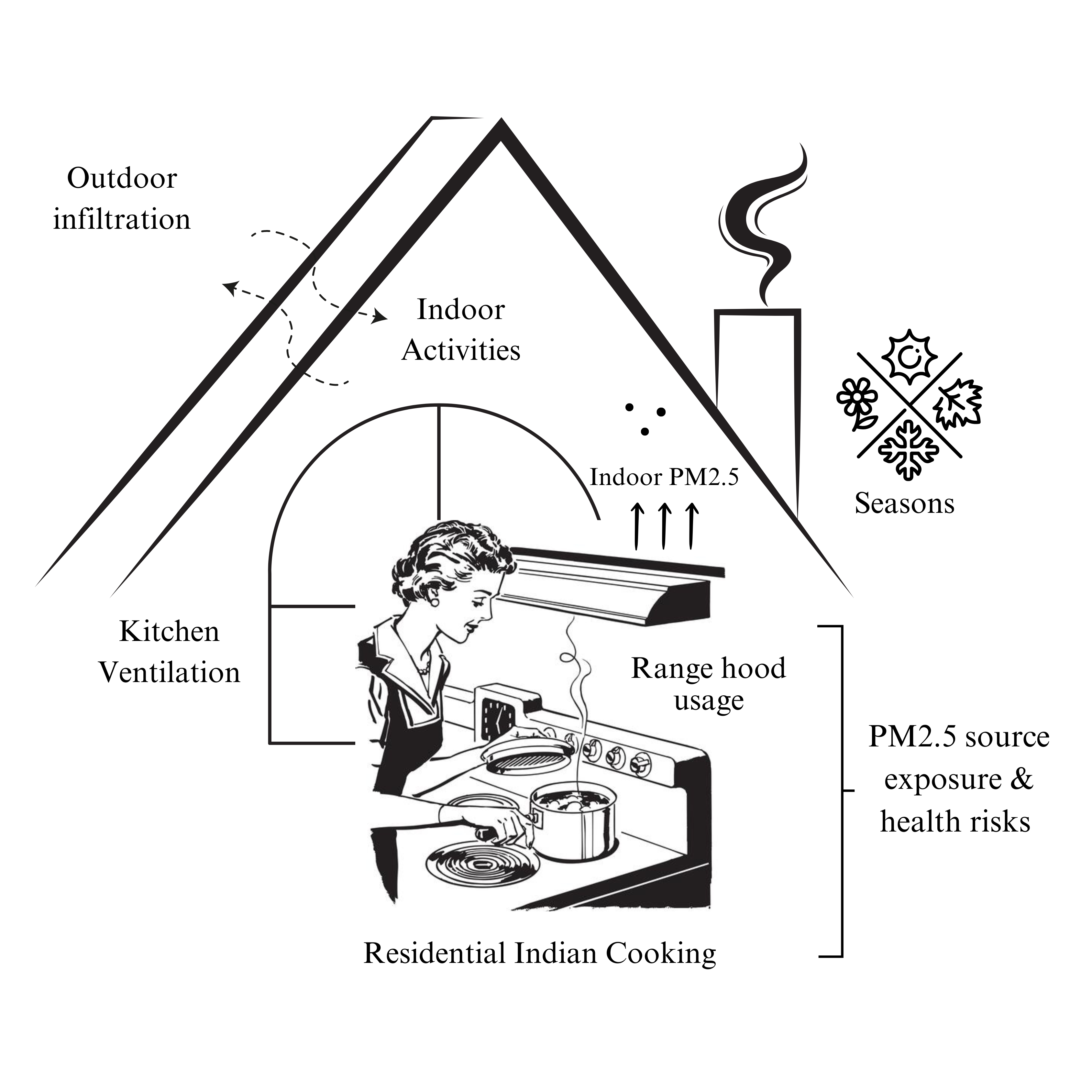
Residential cooking is a major yet under-recognized source of indoor air pollution, particularly in urban households across the Global South, where exposure to fine particulate matter (PM2.5) poses serious public health risks. This study examines cooking behaviours, ventilation practices, and indoor air quality in 58 urban homes in Bengaluru, India. Using continuous PM2.5 monitoring alongside detailed household surveys, we assessed emission levels, exposure durations, and the effectiveness of ventilation strategies across two seasons. Findings reveal that only 15% of cooking events utilized range hoods, and window ventilation was highly seasonal, resulting in prolonged pollutant persistence indoors. The use of simple ventilation measures (opening windows or operating range hoods) increased PM2.5 decay rates by more than twofold, significantly reducing exposure levels. Gas stoves were associated with nearly twice the PM2.5 emissions compared to electric stoves. On average, cooking contributed approximately 26% of daily indoor PM2.5 exposure, with the first hour after cooking identified as a critical window of elevated exposure. These results underscore the pressing need for targeted behaviour change, improved kitchen ventilation designs, and policy interventions to mitigate indoor air pollution exposure. Findings related to electric stoves are descriptive due to the limited sample size (n = 13). The study highlights the importance of integrating indoor air quality considerations into urban housing policies, especially in rapidly growing cities where the health impacts of indoor pollution are often overlooked. Indian urban context factors, such as building codes, household economics, and cultural practices, are crucial for tailored interventions. This work provides actionable insights for public health strategies, sustainable housing design, and environmental policy, with broader relevance to urban centers facing similar indoor air quality challenges worldwide.