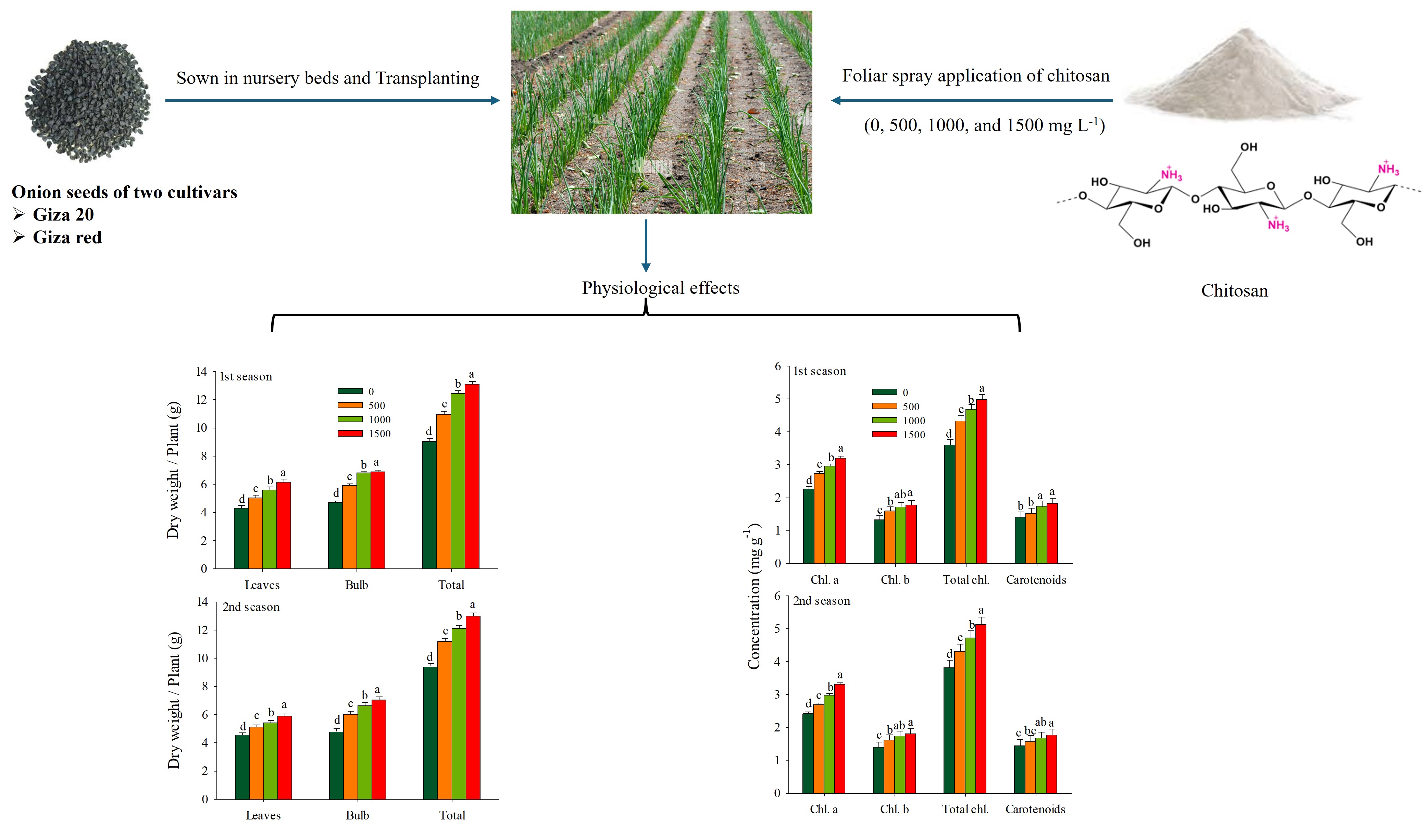
Effect of foliar application of chitosan on growth, yield, and bulb quality of two onion cultivars were evaluated under sandy soil conditions. Two field experiments were conducted during winter seasons of 2023/2024 and 2024/2025 at El-Saleheya El-Gadida, Sharkia Governorate, Egypt. Four concentrations of chitosan (0, 500, 1000, and 1500 mg L⁻¹) were applied as foliar spray on two onion cultivars (Giza 20 and Giza Red) grown under a drip irrigation system. Growth parameters, yield components, and bulb quality traits were recorded. The interaction between Giza 20 and chitosan at 1500 mg L⁻¹ significantly increased leaf, bulb, and total dry weight, as well as chlorophyll (a, b, total) and carotenoids. It also enhanced yield traits, including grade 1 and 2, exportable, marketable, and total yield, in addition to average bulb weight and nitrogen and phosphorus contents. In contrast, Giza Red treated with 1500 mg L⁻¹ chitosan showed superior bulb quality, with higher potassium content, total soluble solids (TSS), dry matter, vitamin C, and pungency. Foliar application of chitosan at 1500 mg L⁻¹ improves onion growth, productivity, and quality under sandy soil conditions. It represents a sustainable and environmentally friendly strategy that supports efficient resource use and reduces dependence on chemical inputs.