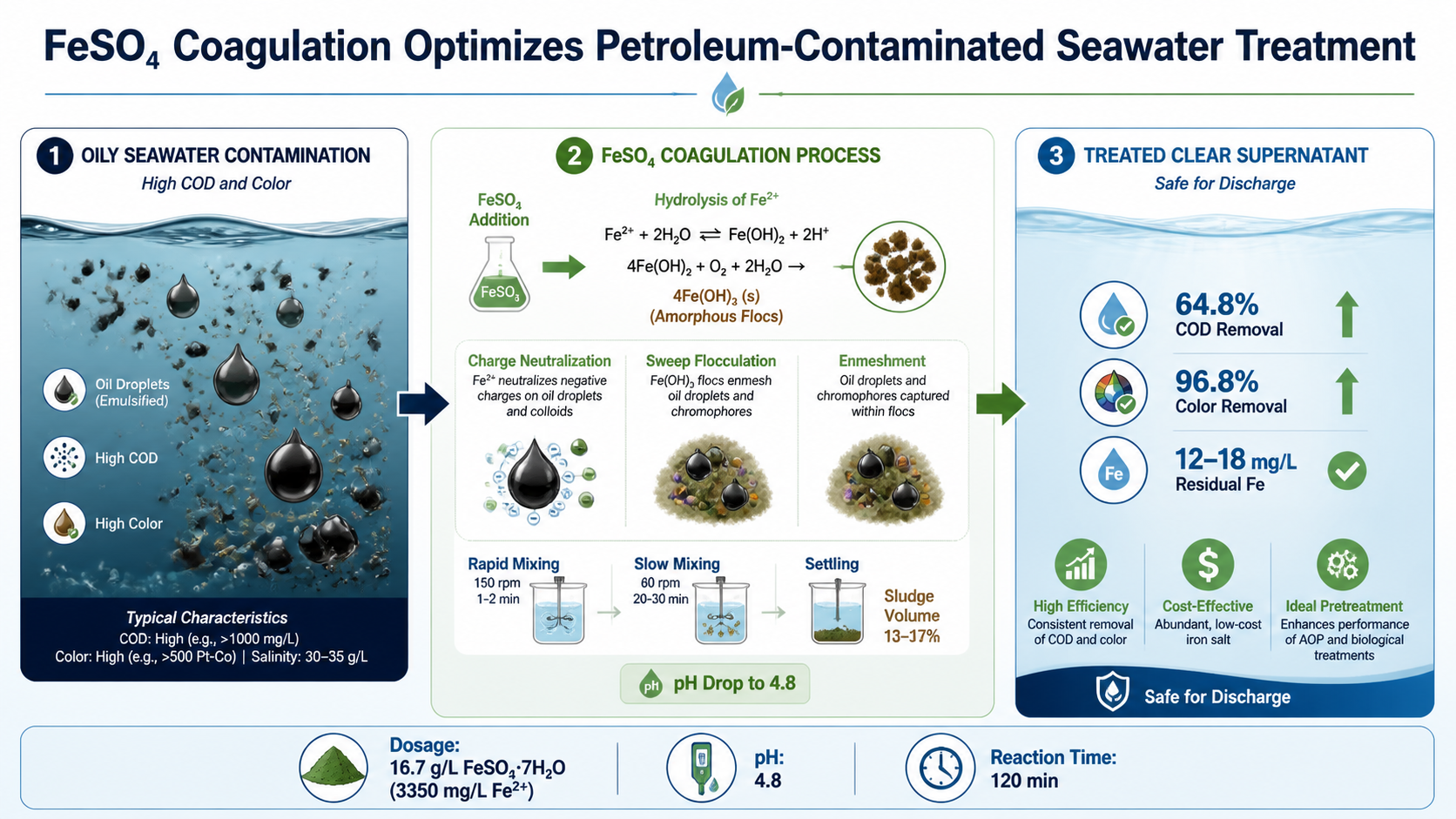
The presented work investigates the performance of ferrous sulfate (FeSO₄) in treating contaminated seawater with petroleum hydrocarbons. Synthetic water containing 0.1% (v/v) oil was subjected to varying FeSO₄ dosage, pH and reaction time under controlled conditions. The effects of the operating conditions were evaluated based on removing chemical oxygen demand (COD), color and the final pH effluent. COD and color removal reached to 64.8% and 96.8% respectively using 16.7g/60ml FeSO₄.7H2O (»3350 mg/L Fe2+) at 120 min reaction time. At this optimum, the settled sludge volume was 13-17% of the treated sample and residual iron in the supernatant was 12-18 mg/L, within marine discharge limits. The COD reduction stabilized, indicating coagulation equilibrium, however, the first 30 min shows rapid color removal. The FeSO₄ concentration when increased, resulted in reduction of pH due to Fe2+ hydrolysis, which in turn promoted floc formation through neutralization and coagulation. Statistical analysis (ANOVA)confirmed that dosage, pH, and reaction time significantly affected removal efficiencies (p < 0.05). From the results it can be confirmed that FeSO₄ is an efficient and low cost treatment for petroleum wastewater. It offers substantial pollution reduction and has potential compatibility with subsequent oxidation and/or biological treatment processes. Taken together, these findings show that FeSO4 offers a practical and cost effective alternative for pre-treatment of Petroleum affected seawater under saline conditions, and that its use could enhance the overall efficiency of subsequent AOP or biological processes. The approach used is particularly feasible for contained coastal applications and as a rapid response for near shore oil spills. Unlike prior studies for freshwater or low salinity refinery wastewater, this work gives saline-specific benchmark for FeSO4 dosage, pH shift, kinetics, amount of sludge production and residual iron-critical parameters for coastal oil spill treatment.