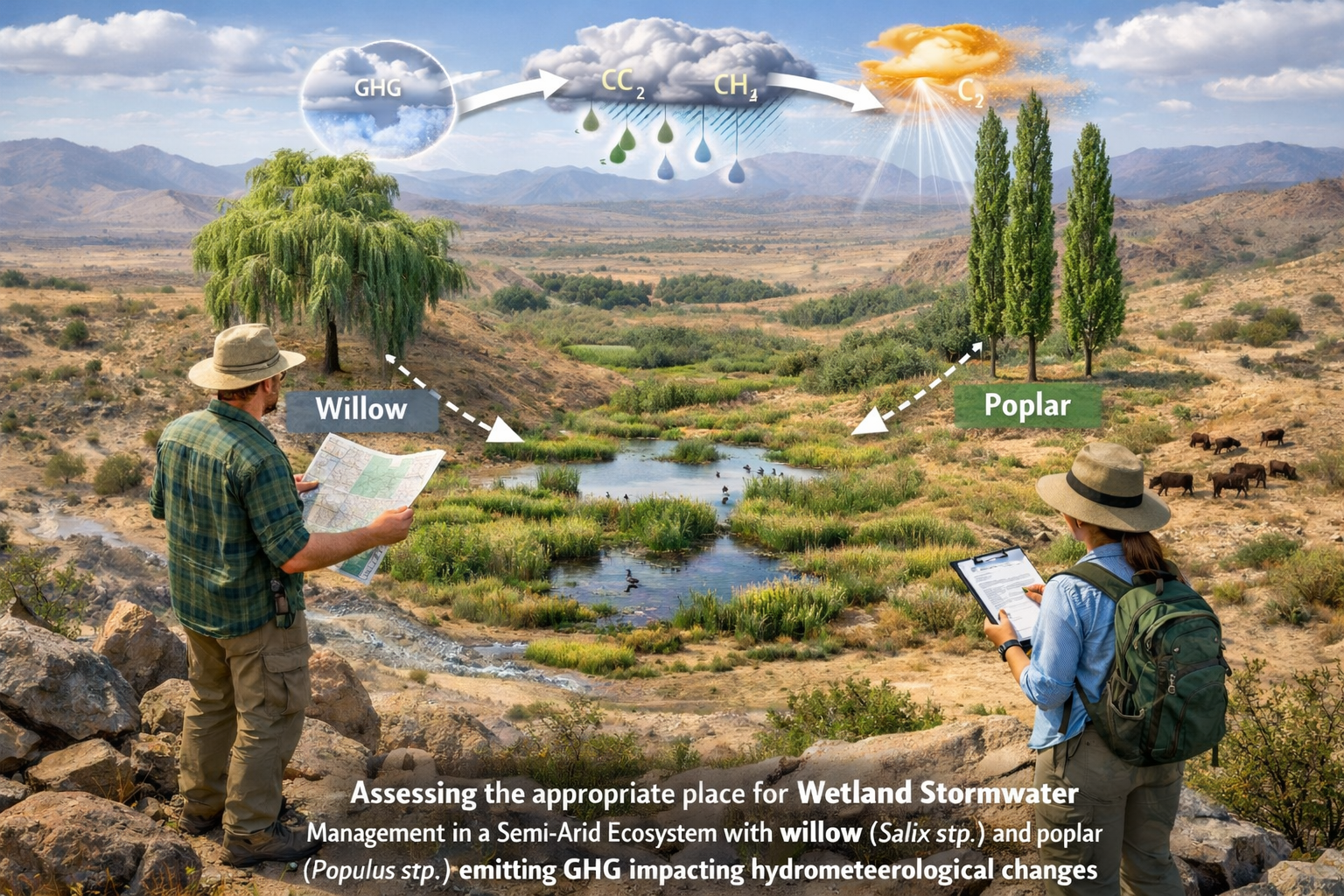
The current research investigates how designed wetlands and green infrastructure can help regulate hydrometeorological variability in Erbil's semi-arid Bnaslawa sub-district. Semi-arid regions are increasingly confronted with difficulties such as rainfall unpredictability, surface runoff, and greenhouse gas (GHG) emissions, emphasising the need for integrated water-management solutions. A spatial suitability evaluation was conducted to determine the best wetland placements, followed by EPA SWMM hydraulic models to assess runoff reduction throughout different 24-hour rainfall return periods. Willow (Salix spp.) and poplar (Populus spp.) trees were chosen for their great adaptation to semi-arid environments and potential to enhance wetland performance. Studies indicate that constructed wetlands significantly reduce peak runoff and total surface discharge and provide ecological co-benefits such as carbon sequestration and GHG abatement. The vegetation also has significant biomass potential. Overall, combining wetlands with climate-adaptive planting practices is a successful, long-term strategy for reducing flood risk and increasing environmental resilience in semi-arid environments.