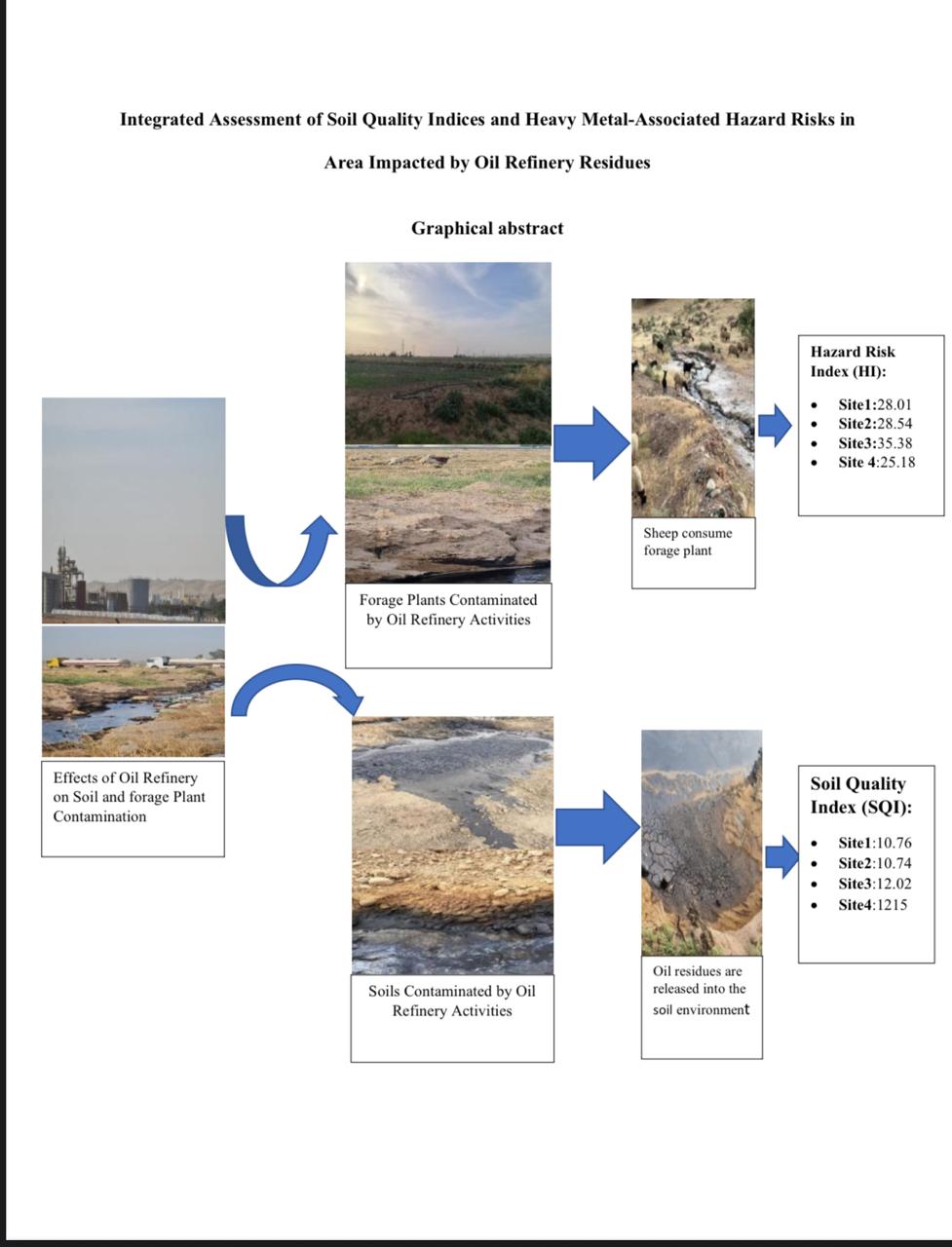
Soils and forage plants near oil refineries are contaminated with heavy metals and pose a potential threat to conservation as well as public health. Discharges from an oil refinery on Gwer Road in Erbil, Iraq, have accumulated along a residual crude oil route at pollution hotspots. The purpose of the present study was to evaluate the accumulation levels of heavy metals in soil and forage, evaluate the quality level for soil by soil quality index (SQI), assess the bioaccumulation factor from the plant (BCF), and estimate non-carcinogenic health risk through hazard quotients (HQ) and total health risk index (HI). Soil and four forage plant species were collected from four sites, and heavy metals were assessed and analyzed using X-ray fluorescence (Rigaku NEX CG). Soils were slightly acidic to neutral (pH 6.22–7.97) with variable electrical conductivity, organic matter, and texture, reflecting a moderate to poor fertility. All metals exceeded Environmental Baseline Standards (EBS), with maximum concentrations of Cr (86.76 mg.kg-1), Ni (67.8 mg.kg-1), Cu (76.64 mg.kg-1), Zn (73.38 mg.kg-1), Cd (1.85 mg.kg-1), and Pb (21.7 mg.kg-1). Trace metals in plants also exceeded the WHO tolerance limits. The SQI values indicated poor soil quality, and the HI was higher than unity (HI > 1), indicating that there were significant non-carcinogenic risks in the study area, mainly due to Pb, Cd, and Ni, indicating health hazards. These findings reflect significant associations between soil degradation and metal accumulation, identify contamination hotspots, and provide important recommendations for industrial soil management and a monitoring program.