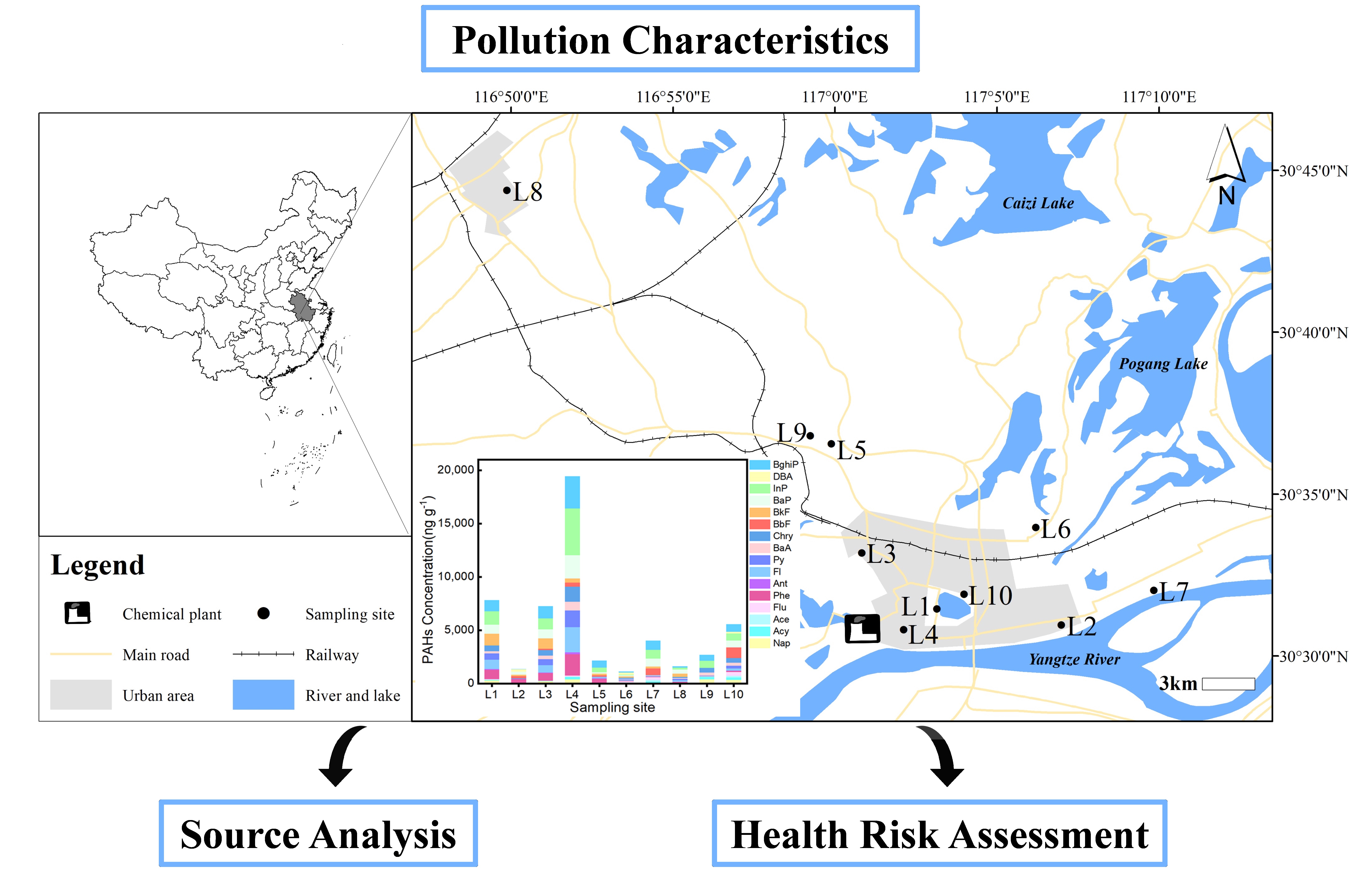
This study systematically analyzed the pollution characteristics, source apportionment, and health risks of 16 polycyclic aromatic hydrocarbons (PAHs) in atmospheric dust deposition, using Anqing City—a typical industrial city in China—as the research subject. Results indicate that the concentration range of Σ16PAHs in atmospheric dust in Anqing City is 85.22 – 21,351.03 ng g-1, with an average of 5,301.21 ng g-1, placing the pollution level in the lower-middle range nationally. Spatial distribution revealed significantly higher PAH concentrations in industrial clusters of Daguan District compared to other areas, indicating industrial emissions as a major point source of PAHs. The composition was dominated by high-ring (5–6 ring) PAHs (average proportion: 58.90%), indicating primary origin from high-temperature combustion processes. Integrated source apportionment using ring number distribution, characteristic ratio analysis, and positive matrix factorization (PMF) models identified fossil fuel combustion and industrial activities as the primary PAH sources. Health risk assessments revealed skin contact as the predominant exposure pathway for both adults and children, with carcinogenic risks approaching or exceeding acceptable thresholds under certain high-exposure scenarios.