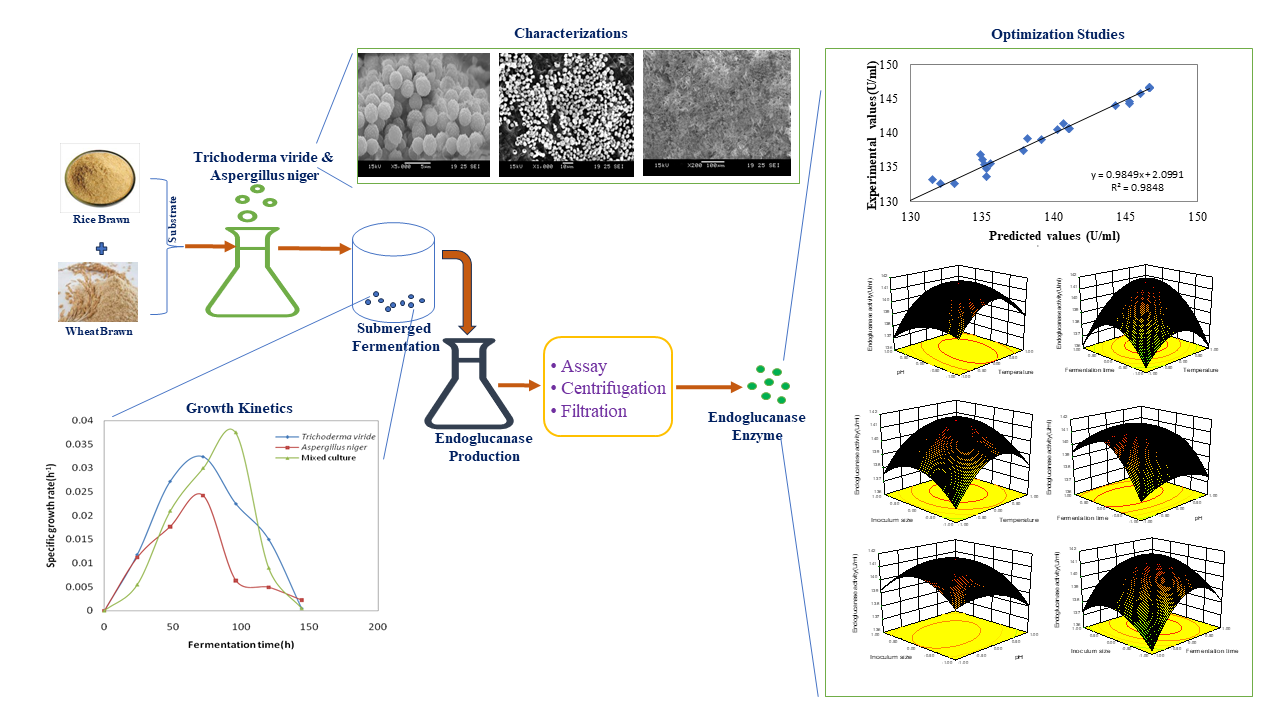
This study investigates the bioprocess optimization of enzyme production using agrowaste substrates and mixed fungal cultures. Kinetic studies were conducted to analyse endoglucanase production by Trichoderma viride, Aspergillus niger, and their mixed culture. The modeling covered growth, product formation, and substrate consumption. To date, limited studies have systematically compared monoculture and mixed culture systems using rice bran and wheat bran under structured kinetic modelling. This synergistic interaction contributes to improved bioconversion efficiency compared to the use of single substrates, representing a novel approach in agrowaste valorization. The mixed culture, utilizing rice bran and wheat bran, achieved a maximum endoglucanase production of 145.35 U/ml, outperforming T. viride and A. niger monocultures by approximately 46% and 27%, respectively. Maximum specific growth rates (µmax) were 0.02421 h⁻¹ for T. viride, 0.0325 h⁻¹ for A. niger, and 0.0375 h⁻¹ for the mixed culture. The Yxs values were 0.2855, 0.2933, and 0.2601, while Ypx values were 6.5051, 5.6092, and 9.9631, respectively, highlighting the superior productivity of the mixed culture. The improved results were due to the combined action of both fungal species. They worked together, helping each other break down the material more effectively. This showed that using mixed cultures could be a low-cost and eco-friendly way to produce enzymes from agricultural waste. It also supported the development of better and more efficient methods for bioprocessing strategies.