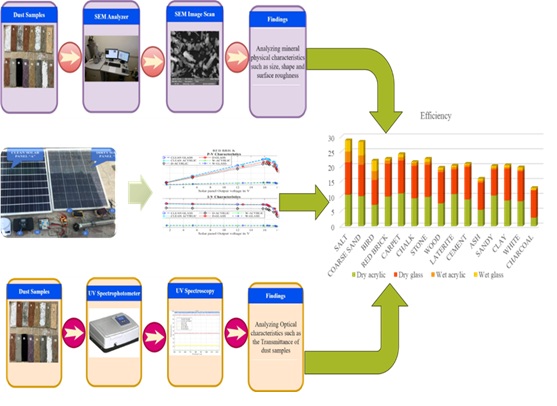
Solar panel efficiency is significantly impacted by dust deposition. Due to exposure to the environment, the solar array becomes dust on its exterior surface, which diminishes the amount of sunlight that reaches the solar cell's surface and consequently reduces its output. The impact of 16 distinct dust samples collected from various sources is examined in the present investigation. Construction site dusts (laterite, sand, cement, white cement, red brick dust, clay soil, coarse sand, wood dust, stone dust, sandy soil, and loam sand), thermal power plants, the steel business, and the salt industry (ash, charcoal, and salt) are some of these sources. Natural sources, including bird droppings, are also considered. The significance of these dust samples on solar PV panel efficiency is the primary emphasis. The transmission of sunlight into the solar panel varies depending on the dust samples’ morphological, optical, and dust density characteristics. This variation influences the solar photovoltaic power generation system's efficiency. Charcoal dust significantly disturbs the efficiency of solar PV systems more than any other sort of dust. The findings indicate that an effort were made to increase the solar panel's efficiency and that the regularity of the dust cleaning procedure is dependent on the deposition of dust samples. A wet wiper system enhances the efficacy of solar photovoltaic panels by mitigating the effects of dust accumulation and temperature fluctuations.