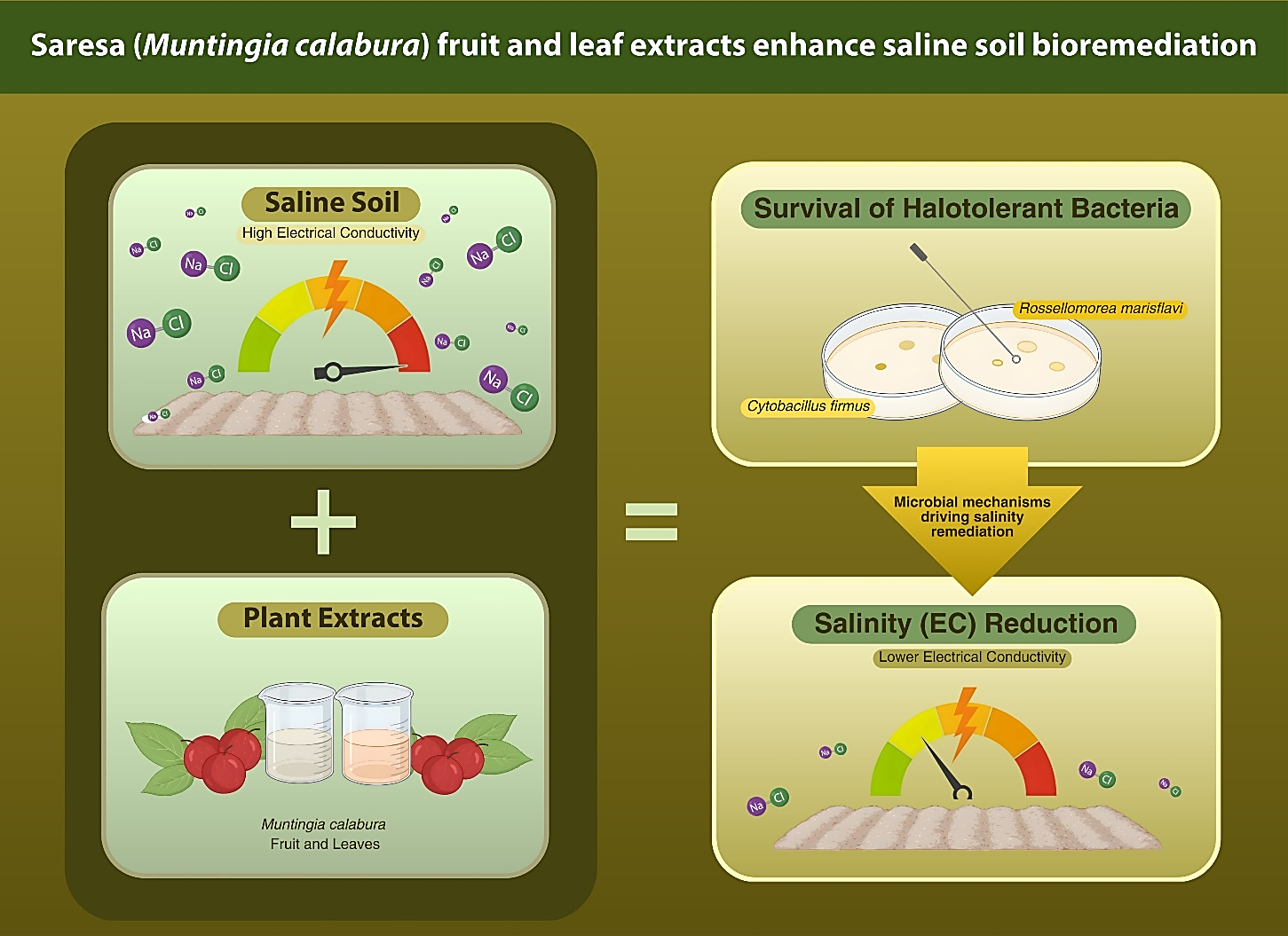
Land salinization negatively affects soil quality and crop productivity. This can be countered through bioremediation of salt-affected soil using microorganisms, which can be further enhanced through biostimulation. In the present study, the biostimulatory effect of Muntingia calabura fruit and leaf extracts as determined by soil salinity and bacterial load was explored. Representative bacterial colonies were also characterized via full-length 16S rRNA (~1500 bp) analysis through DNA barcoding. The results showed that the soil with fruit and leaf extracts (SS + FE and SS + LE, respectively) demonstrated lower electrical conductivity (EC) values than those of the control (applied with distilled water). Meanwhile, the bacterial load in all the treatments gradually decreased, possibly due to the salt stress and the extracts’ antimicrobial properties. Molecular characterization revealed that the surviving species were closely related to halotolerant bacteria Rossellomorea marisflavi with 100.00% percent identity and Cytobacillus firmus (98.97% and 98.84%), documenting the first potential occurrence of these taxa in Central Luzon, Philippines. The study suggests that the extracts, while lowering total bacterial load, might have served as a growth-supporting nutrient source for the halotolerant species, corroborating the improved EC reduction. Further investigations on the multifaceted bioremediation mechanisms using the extracts are strongly recommended.