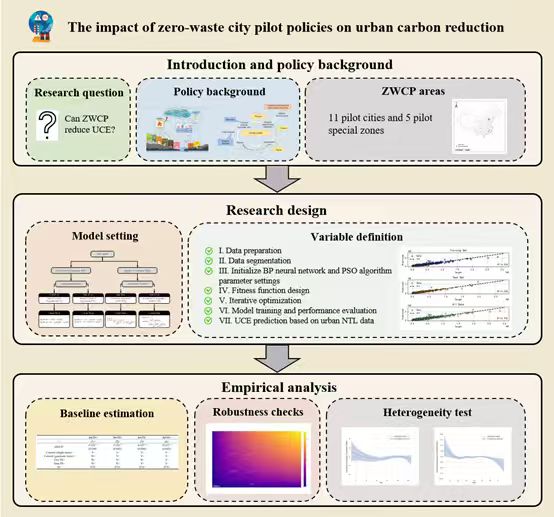
The construction of zero-waste cities is an important driver for achieving the “dual carbon” goals on schedule and for advancing ecological civilization to a higher level. Based on data from 287 cities in China from 2010 to 2022, a dual machine learning model was employed to empirically examine the impact of zero-waste city construction on urban carbon emissions, using the pilot policy as a quasi-natural experiment. The research yields the following conclusions: (1) The implementation of the zero-waste city policy significantly reduces carbon emissions in pilot areas. This conclusion remains robust after a series of tests, including adjustments to the research sample, reconfiguration of the dual machine learning model, and sensitivity analyses. (2) The policy has a more pronounced effect in reducing carbon emissions in major eco-friendly cities, non-resource-based cities, and old industrial base cities, compared to non-major eco-friendly cities, resource-based cities, and non-old industrial base cities. (3) Improvements in science and technology research and internet development levels enhance the carbon reduction effect of zero-waste city initiatives. These findings provide valuable insights for promoting the governance of urban solid waste and achieving the “dual carbon” goals in a coordinated manner.