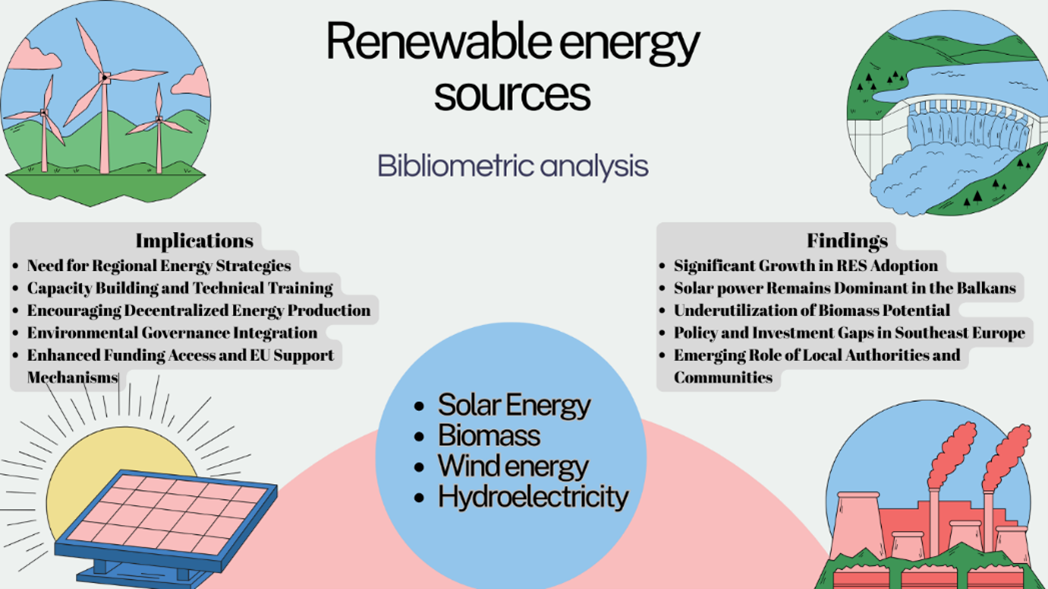
To tackle climate change challenges, expanding renewable energy sources is crucial. After the initiation of the REPower EU plan, studying the recent scientific research trend according to specific criteria, such as country location or economic status, helps identify current challenges and set new priorities. Within this concept, we conducted bibliometric research from 2022 to November 2025, focusing on renewable energy sources such as wind energy, solar energy, biomass and hydroelectricity for the case of EU member countries and the Balkans. Furthermore, we compared the bibliometric results with variables such as renewable energy penetration and GDP. Results revealed that the current research focuses primarily on solar and wind energy. The research focuses largely on new technological advances, energy storage technologies, socio-economic aspects, and the concept of sustainability. Specifically, the subjects most studied regarding biomass are its annual variation, agricultural biomass, and edible biomass. Concerning solar energy, the most intensively studied topics are module automation, energy efficiency, and energy storage. Concerning hydroelectricity, the hot topics are reservoirs and optimisation technologies. Regarding wind energy, the recent trend is focused on wind turbine technology, aerodynamics, and economic aspects. Our analysis concludes that the Balkan countries focus on leveraging their competitive advantages in solar and hydro energy due to their geographic characteristics and location. Meanwhile, EU member countries are now focusing on technological advancements and are also showing growing interest in biomass investments.