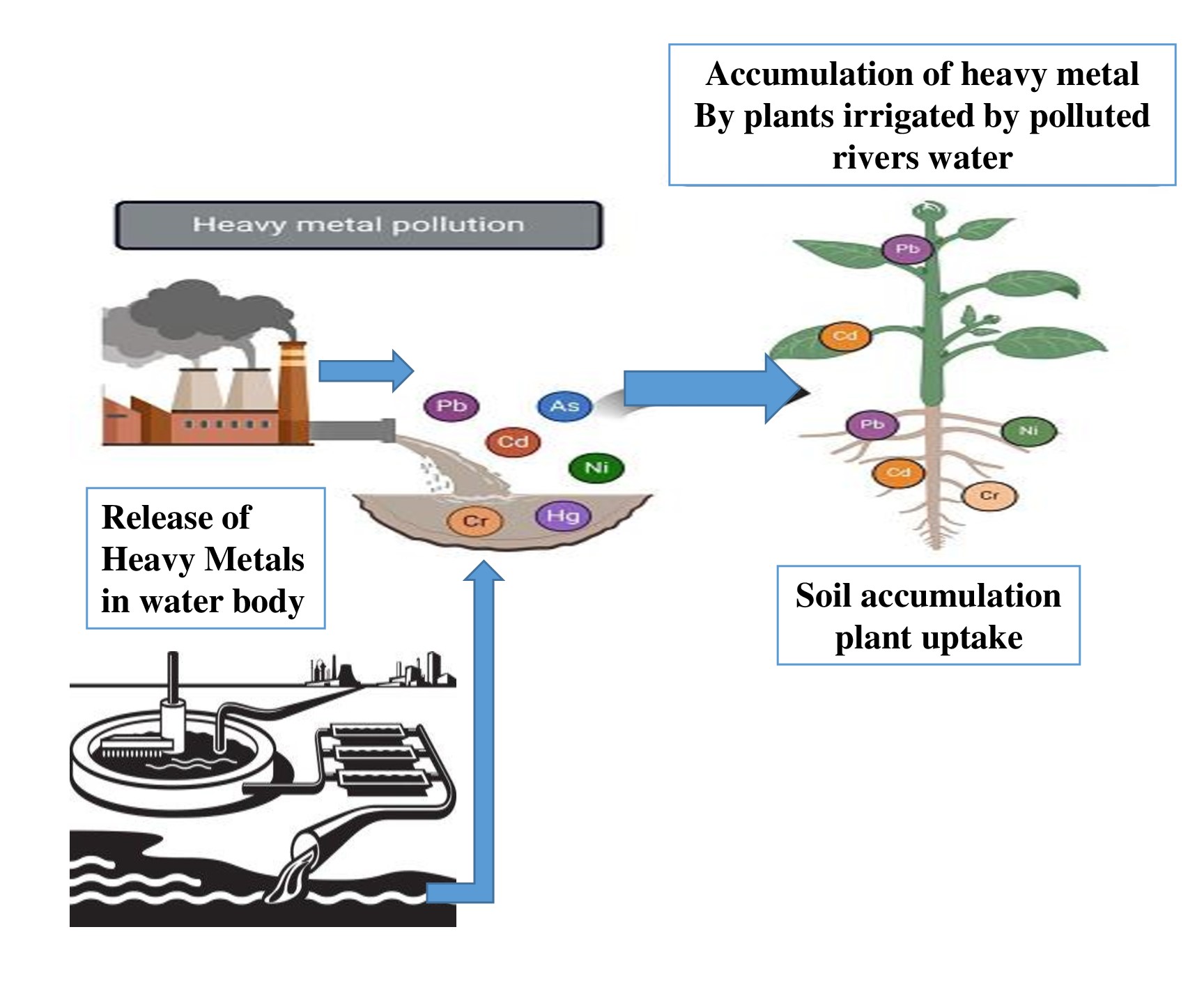
An economy's progress is critically dependent on industrialization. However, it also negatively impacts the ecosystem by releasing dangerous elements like heavy metals into surface aquifers. The purpose of this study was to assess the contamination by heavy metals of edible plants (pepper, watermelon, and lettuce) grown on agricultural land around the Boumerzoug River in Constantine Province, Algeria, and irrigated with river water. Plants were subjected to total quantification of metals (Cu, Cd, Zn, Cr, Pb, and Fe) in four organs (root, stem, leaf, and fruit). Metal concentrations were within acceptable limits, but the Pb and Cd contents were higher than usual levels, indicating a greater potential for health concerns if consumed regularly. The plant organ type affect metal accumulation. The root was the organ that accumulated the most metals, and lettuce was the plant that accumulated the most. The Transfer Factor (TF) was higher for Cd and Cu (> 1). This study recommends continual surveillance of irrigation water and crops to prevent the accumulation of heavy metals beyond permissible levels in the food chain. Thus, to protect both human and animal health in the research area, preventive actions must be taken to limit heavy metal deposition through wastewater irrigation.